




Pile height is measured from the backing to the tip of the blade. Shorter piles (around 20–25mm) suit areas with heavier foot traffic or where a neat, close-cut appearance is wanted. Mid-range piles (25–30mm) are the most popular choice for family gardens, balancing durability with a natural look. Taller piles (30–40mm) give a lusher, more cushioned finish and work well in lower-traffic areas or where children play. If in doubt, order a sample before committing to a full roll.
Buy Artificial Grass by the Metre – Rolls & Accessories
MacBlair stocks a range of artificial grass rolls to suit gardens, patios, play areas and commercial applications. Pile heights typically run from around 20mm up to 40mm — shorter piles suit high-traffic areas and neater, more formal looks, while taller piles give a lush, cushioned finish suited to family gardens and children's play spaces. Modern synthetic turf is made from UV-stabilised polyethylene blades with a polypropylene or nylon thatch layer stitched into a latex or polyurethane-coated backing, giving it the resilience to handle Northern Ireland's wet climate without fading, rotting, or going brittle.
Artificial grass works across a wide variety of surfaces and settings. Common uses include:
- Replacing worn or muddy natural lawns
- Patios, balconies and flat roofs
- Children's play areas and school grounds
- Pet-friendly garden zones
- Commercial landscaping and event spaces
Getting the base right is the most critical part of any installation. A well-prepared sub-base, typically compacted aggregate topped with a grit sand or granite dust layer, provides the drainage and stability the turf needs to perform over the long term. Laying a Weed Control Membrane beneath the sub-base prevents roots pushing through from below. For a clean finish along borders and pathways, pair the installation with Kerbs, Edgings and Risers to hold the perimeter in place. Sand infill is then brushed in at roughly 6–8kg per square metre to keep the pile upright and achieve a natural finish.
Quality artificial grass needs very little upkeep once laid. A stiff brush or plastic rake removes debris and keeps the pile looking good; pet mess rinses away cleanly thanks to the integrated drainage layer. Paired with the right groundwork, a good-quality lawn can last 15–20 years. Browse the full Landscaping and Gardening range for everything from Paving to Decorative Stones to complete the outdoor space.
Artificial Grass FAQ's
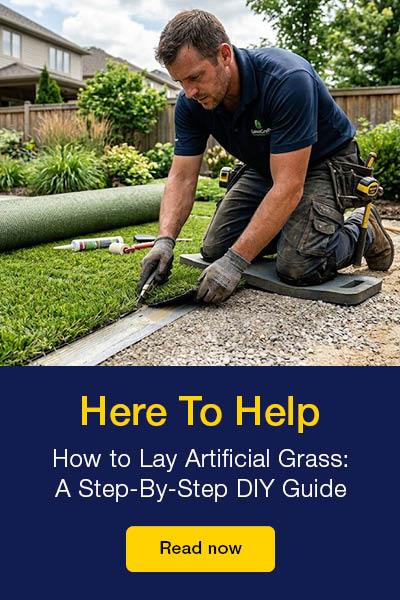
Yes, artificial grass is a manageable DIY project for most homeowners, particularly on smaller or regularly shaped areas. The most important part of the job is the groundwork: dig out existing turf to a depth of around 75–100mm, lay a compacted aggregate sub-base, add a weed membrane, and finish with a grit sand or granite dust levelling layer. Get the base wrong and the grass will sink, develop bumps, or drain poorly. Take your time with preparation and the laying itself is relatively quick.
Yes. Quality artificial grass is made using non-toxic, lead-free materials that are safe for both pets and children. It will not create muddy paw prints, and pet waste can be scooped up and the area rinsed down with a hose. For children's play areas, a taller pile with a shock pad underlay adds extra cushioning for falls. Always check the product specification to confirm it carries the relevant safety ratings for your intended use.
A quality artificial lawn typically lasts between 15 and 20 years, provided the sub-base is properly prepared and the surface receives basic maintenance. UV-stabilised fibres prevent the blades from fading or going brittle in sunlight. The main factors that shorten lifespan are a poorly constructed base, heavy concentrated foot traffic, and neglect. Regular brushing with a stiff brush and occasional rinsing will keep it looking good for years.
Yes. Laying artificial grass directly onto soil is not recommended. A proper sub-base is essential: compact a layer of MOT Type 1 aggregate, then top with a grit sand or granite dust layer for a smooth, level finish. A weed control membrane should be laid beneath the aggregate to stop roots breaking through over time. On hard surfaces such as concrete or decking, a foam shock pad underlay is advisable for drainage and cushioning. Edging boards or kerbing around the perimeter hold everything in place and give a neat finish.