




Most single garden gates are 900mm (3ft) wide, which suits the majority of standard pedestrian openings. Narrower options around 750mm are available for tighter gaps, and wider gates up to 1200mm or more are used where larger access is needed. If you are replacing an existing gate, measure the clear gap between posts before ordering to make sure you get the right fit.
Garden Gate Styles, Sizes and Fittings for Every Boundary
MacBlair stocks a solid range of garden gates suited to side passages, garden entrances, and boundary access points. The selection covers the three most common materials: pressure-treated timber for a classic, paintable finish; metal gates in powder-coated steel for a cleaner, more contemporary look; and composite options that resist warping, moisture and fading with very little upkeep. Each material suits different priorities, so the right choice usually comes down to how the gate will look alongside existing Fence Panels and how much maintenance you want to take on.
Timber gates are typically framed, ledged and braced to prevent sagging over time. This construction keeps the gate square under its own weight and adds meaningful strength at the latch and hinge points. Pressure-treated options carry anti-rot guarantees and can be left as-is or finished with Fence Paint or wood stain to match the surrounding boundary. Standard widths tend to sit between 900mm and 1200mm, covering most pedestrian openings. Heights generally range from 900mm for low picket-style gates up to 1.8m for full-privacy side access.
Getting the installation right matters as much as the gate itself. Posts need to be set correctly in the ground, usually concreted in using Postcrete, and sized to extend at least 600mm deeper than the gate height. Once hung, a gate is only as secure as its fittings. MacBlair also carries the hardware to complete the job properly:
- Gate Hinges in a range of sizes to suit different gate weights
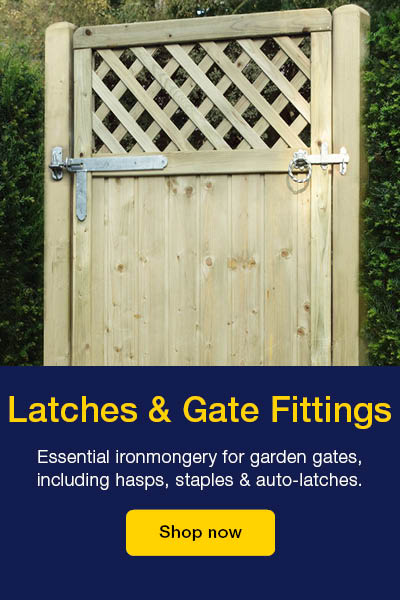
- Latches and Gate Fittings for secure, reliable closing
- Padbolts for added locking where access control is needed
All timber used across the range is sourced from sustainably managed forests and treated to meet UK standards for outdoor use. Gates are supplied ready to hang, keeping the job straightforward whether it is a direct replacement or part of a new fencing project. Delivery is available across Northern Ireland, with click-and-collect also an option for those who prefer to pick up in person.
Garden Gate FAQ's
Dip-treated gates have had preservative applied by soaking, which gives a reasonable level of protection and typically comes with a 10-year anti-rot guarantee. Pressure-treated gates go through a process that forces preservative deep into the wood fibres, giving longer-lasting protection and usually a 15-year guarantee. For a gate that gets regular use and exposure to wet weather, pressure treatment is generally worth the extra cost.
The size of hinge you need depends on the width and weight of the gate. As a general guide, tee hinges are suitable for lighter gates up to around 915mm wide. Hooks and band hinges are better for heavier or wider gates. Always use at least two hinges per gate, positioned towards the top and bottom of the hanging stile. For tall or particularly heavy gates, three hinges will give a more stable hang and reduce the risk of sagging over time.
Sagging is most often caused by poor framing, undersized hinges, or posts that have not been set firmly enough in the ground. Choose a gate with a framed, ledged and braced construction, as this diagonal bracing supports the weight of the gate and keeps it square. Set the gate posts in concrete at least 600mm into the ground, and make sure the hinges are the correct size for the gate. Checking and tightening hinge fixings every season also helps prevent gradual sag.
If the gate is pressure treated, it does not strictly need additional treatment straight away, but applying a coat of fence paint, wood stain or preservative will extend its life and improve its appearance. Dip-treated gates benefit from a treatment coat sooner after installation. As a rule, re-treating every one to two years keeps the timber in good condition and helps maintain the anti-rot protection, particularly on cut edges and any areas where the wood has been drilled or trimmed during fitting.