




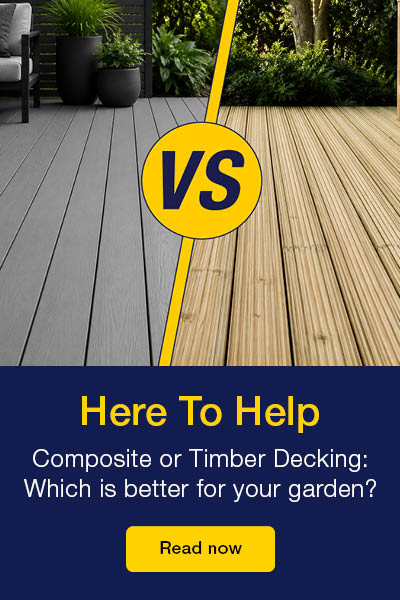
It depends on your priorities. Composite decking requires far less maintenance than timber — there's no need for annual sanding, oiling, or staining, and the boards won't rot, warp, or splinter over time. Timber tends to cost less upfront and gives a fully natural look, but needs regular treatment to stay in good condition. Composite is generally the better long-term choice for low-effort outdoor use, particularly in wet climates like Northern Ireland's.
Low-Maintenance Composite Decking for Gardens & Outdoor Spaces
Composite decking is made from a blend of recycled wood fibres and plastic polymer, producing boards that replicate the look of timber without the upkeep. MacBlair stocks a range of composite deck boards to suit gardens, patios, balconies, and raised platforms — available in hollow-core and solid-core profiles, with dual-sided designs that give a woodgrain effect on one face and a grooved finish on the reverse. Colours span natural wood tones through to contemporary greys and charcoal shades, making it straightforward to match an existing scheme or start fresh.
Unlike timber decking, composite boards won't rot, warp, or splinter, and there's no annual sanding, staining, or sealing involved. The boards carry built-in UV stabilisers and anti-mildew additives throughout the material rather than just the surface coating, which means protection holds up even as the boards wear. Most products in the range also feature textured anti-slip surfaces — an important consideration given the wet conditions common across Northern Ireland year-round.
Composite decking can be fixed using hidden clip systems for a clean finish with no visible screw heads, or face-fixed using appropriate composite decking screws. Boards are typically installed over timber or recycled plastic joists — correct joist spacing and underboard ventilation are key to long-term performance. Complete the installation with decking handrails, decking spindles, and decking posts from the wider decking range. Fascia and bullnose boards are also available to finish edges neatly on steps and perimeters.
Boards in the range come with manufacturer warranties typically between 10 and 25 years, reflecting the material's long service life compared to softwood alternatives. Maintenance is minimal — a brush down and an occasional wash with warm soapy water or a pressure washer on a low setting keeps the surface looking good. Many boards are made from a high proportion of recycled content, which also makes composite a more sustainable choice than virgin plastic or regularly replaced timber.
Composite Decking FAQ's
Most composite decking boards are designed to last between 25 and 30 years when properly installed and maintained. Many products come with manufacturer warranties ranging from 10 to 25 years. The key factors affecting lifespan are correct installation — particularly adequate joist spacing and underboard ventilation — plus occasional cleaning to prevent the build-up of dirt and organic matter.
Quality composite boards include textured or grooved surfaces specifically to improve grip in wet conditions. Many products are slip-tested to BS 7976-2 standards for both wet and dry use. That said, like any outdoor surface, algae or leaf debris left to build up can reduce grip over time. A regular brush down and occasional wash keeps the surface safe and clean throughout the year.
Yes, composite decking is well-suited to DIY installation. Boards are typically fixed to timber or recycled plastic joists using either hidden clips for a screw-free finish, or face-fixed with composite decking screws. The most important steps are ensuring the subframe is level, getting joist spacing right (usually 400mm centres, or 300mm at board ends), and leaving a small gap between boards for drainage and expansion. Always follow the manufacturer's installation guide for the specific boards you are using.
Some colour change in the first few months is normal as the boards weather in — this is particularly common with uncapped composite boards. Capped composite boards have a protective polymer layer over the surface that significantly slows UV-related fading and staining. Most boards include UV stabilisers blended through the material, and with routine cleaning the colour will remain consistent for many years. Avoid harsh chemical cleaners, which can strip the surface finish over time.