




Rigid boards can be easily cut to size using a fine-toothed hand saw or a sharp utility knife. Measure the required dimensions, mark a straight line, and saw cleanly through the material to ensure a tight fit between the wall ties.
Insulation Materials for External Masonry Walls
Cavity wall insulation involves inserting thermal barrier materials between the inner and outer leaves of external masonry walls. The available options include rigid polyisocyanurate (PIR) boards with low emissivity foil facings and water-repellent mineral wool batts. These materials reduce heat loss through the building envelope and help meet current building regulations for thermal efficiency. When installing the insulation layers alongside bricks and blocks, it is important to ensure a snug fit to prevent cold bridging across the cavity space.
Keeping the cavity clean during the build process is necessary for maintaining the integrity of the insulation. Using appropriate wall ties helps secure both the masonry and the insulation boards firmly in place without compromising the cavity width. Mineral wool options offer sound absorption alongside thermal resistance and naturally knit together at the joints. Rigid boards provide a lower thermal conductivity, allowing for thinner wall profiles while achieving the same U-values. Both types resist moisture penetration and maintain their performance over the lifetime of the building.
Finishing the internal side of the cavity wall correctly contributes to the overall thermal performance of the structure. Attaching insulated plasterboard to the inner masonry leaf can provide an additional layer of thermal resistance. The insulation materials are lightweight, easy to cut with standard hand tools, and do not sag over time. Proper installation involves staggering the joints and ensuring all boards are tightly butted together.
Cavity Wall Insulation FAQ's
This depends on the specific insulation type. Partial fill insulation requires a clear residual cavity, typically 50mm, between the insulation and the outer brickwork to prevent moisture transfer. Full fill mineral wool batts fill the entire space without requiring an air gap.
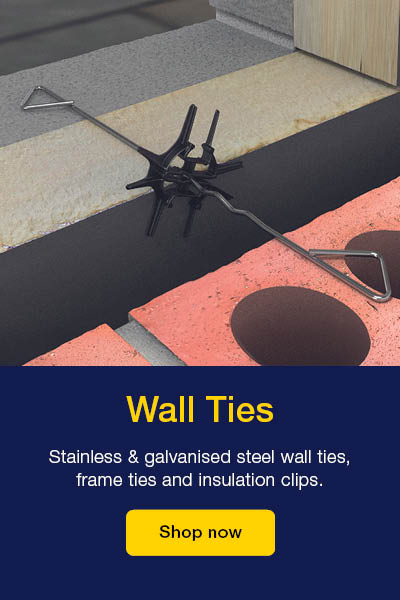
The boards or batts are secured against the inner leaf of the masonry using retaining clips. These clips slide over the ties and press firmly against the face of the insulation, keeping it stable as the outer wall is built.
Properties built in recent decades usually have insulation installed during construction. On older buildings, a pattern of filled drill holes in the external mortar joints often indicates that insulation was blown in at a later date. A professional can also drill a small test hole and use a borescope camera to inspect the inside of the wall to check for existing materials.
The necessary thickness depends on the target U-value required for the external walls. Because rigid PIR boards have a lower thermal conductivity, they typically require a thinner profile than mineral wool to achieve the same result. The overall wall makeup needs to be calculated to find the exact thickness needed, which often falls between 50mm and 150mm.