




Yes. Natural slate copes well with rain, frost and temperature changes thanks to its low water absorption and fire‑safe mineral makeup. Always follow the product data and prepare the substrate so water cannot track behind the cladding.
Natural Slate Facing for Exterior and Interior Walls
Slate cladding in this range features natural split‑face stone strips and panels designed for internal feature walls and external façades. Options include Riverstone Natural Uncalibrated Wall Cladding in 100mm, 150mm and 200mm formats, commonly used on plinths, porch walls, chimney breasts and garden features. The dense mineral structure and textured finish give a durable, low‑gloss surface that sits well alongside brickwork, render and timber elevations.
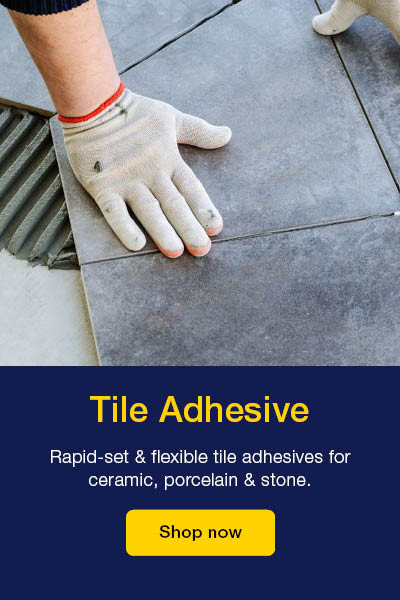
When fixing to masonry or render carriers, a cement‑based, deformable adhesive is typically used to bed the units, with joints back‑buttered for full contact. A flexible C2 adhesive such as EVO Technik Flexible Tile Adhesive OPF 20Kg provides the performance and classification expected for exterior stone tiling, while a preparatory bonding coat like Weber Rend Aid Rendering Undercoat 25Kg helps form a key on smooth or dense backgrounds before cladding is applied. On elevations, movement joints and suitable restraint should be planned as part of the façade build‑up in line with British Standards guidance, and corrosion‑resistant fixings from Screws are often used for ancillary trims, starter rails or framing in vented assemblies. External areas finished in stone frequently return neatly into rendered zones, which can be completed with products from External Render. For vented façades, the cladding can be detailed to sit over compatible insulation layers to improve envelope performance, coordinated with solutions in Cladding & Render and, where specified, rainscreen principles.
Natural slate is non‑combustible, frost resistant and has a very low water absorption, so it copes well with UV, rain and freeze‑thaw cycles with minimal upkeep. These characteristics make it a practical surface for both contemporary and traditional schemes, indoors and out. The cleft texture provides visual depth, while variations in course height allow staggered, coursed or random effects to suit the design.
Slate Cladding FAQ's
Use a cement‑based, flexible C2‑classified adhesive that is suitable for natural stone and exterior use. Back‑butter the pieces for full contact and follow the pot life and curing times stated on the bag.
For low‑level internal features, a fully bonded bed is usually sufficient on a sound background. On external walls, plan movement joints and consider mechanical restraint for higher runs, heavy units or where standards or design risk assessments call for it.
Only if the surface is sound, clean and capable of supporting the load. Remove loose coatings, prime or apply a bonding/key coat where required, and check the overall system weight against the substrate.
Sealing is optional. A breathable impregnator can help with stain resistance, especially in kitchens or busy external areas, but always test on an off‑cut to confirm the final appearance.