




110mm is the most common size for domestic underground drainage; 160mm is used for larger flows, shared runs or where gradients are limited. Check existing pipe OD to match fittings correctly.
Underground Sewer Pipe Connectors, Bends & Junctions
Sewer pipe fittings cover the connectors and accessories used to build and maintain underground foul and surface water runs. The range typically includes ring‑seal couplers, bends (15°, 30°, 45° and 87.5°), junctions (T and Y), reducers, adaptors, rodding eyes, access pipes and plugs in uPVC for 110mm and 160mm systems. These parts are used to link new pipe runs, pick up Soil Pipe stacks, form branch connections and create access points for cleaning and inspection.
Most products are uPVC to BS EN 1401‑1 for non‑pressure underground drainage, with ring seal (push fit) joints designed for leak tight performance and compatibility across components made to the same standard. Installations commonly serve foul drainage from WCs and appliances as well as surface water from gullies and channels, often tying into inspection points finished with Manhole Covers & Grates. Where an existing run is clay, dedicated clay to plastic adaptors allow a reliable transition to modern uPVC fittings.
In practice, these fittings are used for new builds, extensions and repair work: bends and junctions form changes in direction or branch lines; access fittings support rodding and CCTV maintenance; and adaptors manage size or material changes. Cut pipe ends should be squared, de‑burred and chamfered before assembly, then lubricated to protect the seal on push‑fit sockets. For layout, observe Building Regulations guidance on gradients (commonly designed at 1:40 to achieve at least 1:80 in service) and keep foul and surface water on separate systems. Products in this section also connect with surface water components such as channels in Line Drainage and soakaway feeds in Land Drainage, depending on the design.
Sewer Pipe & Fittings FAQ's
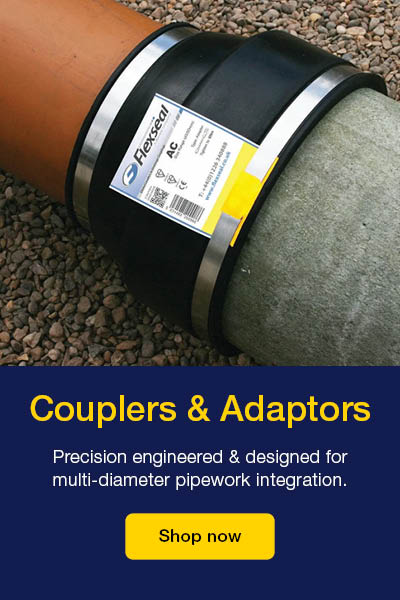
Yes, use a purpose made clay to plastic adaptor to bridge materials while maintaining a watertight seal. Choose an adaptor sized for the clay pipe ID and the 110mm (or 160mm) uPVC spigot.
Underground uPVC drainage to BS EN 1401‑1 is typically ring‑seal (push‑fit) for ease of installation and maintenance; always follow the manufacturer’s instructions for any solvent‑weld items.
Make a straight cut, remove burrs, then chamfer the outside edge and apply pipe lubricant so the spigot passes the seal without damage; this helps ensure a leak‑tight joint.
As a rule of thumb, design at 1:40 to secure a minimum finished fall of 1:80, in line with Approved Document H guidance on pipe gradients.