



How to Bleed a Radiator: A Simple Step-by-Step Guide
If your radiator is warm at the bottom but cold at the top, or just not heating up as well as it used to, there's a good chance it needs bleeding. Bleeding a radiator releases trapped air from the system, letting hot water circulate freely again. It's one of the most common home maintenance jobs, and one of the easiest. You don't need a plumber. You don't need special skills. You just need a radiator key, a cloth, and about five minutes.
Why Do Radiators Need Bleeding?
Over time, air gets into your central heating system. This trapped air rises to the top of the radiator and prevents hot water from filling the whole panel leaving it hot at the bottom but cold at the top.
Other signs your radiators need bleeding:
- The radiator takes much longer than usual to heat up
- You can hear gurgling or trickling sounds inside the radiator when the heating is on
- Some radiators in the house heat up well but others don't
If multiple radiators are cold at the top, it's worth bleeding all of them in one go, starting with the one nearest the boiler and working your way around.
What You'll Need
- Radiator bleed key (also called a radiator key or bleed key)
- A cloth or small towel
- A bowl or container (optional, for catching drips)
Radiator bleed keys are inexpensive and available from any MacBlair branch. Some modern radiators have a flat-head screw bleed valve, in that case you'll need a flat-head screwdriver instead of a key.
How to Bleed a Radiator: Step by Step
Step 1: Turn the Heating On
Turn your central heating on and let it run until all the radiators have had time to heat up, usually 10–15 minutes. This confirms you're dealing with trapped air and helps identify which radiators need attention.
Step 2: Identify Which Radiators Need Bleeding
Run your hand carefully across each radiator (careful, they'll be hot). If the top portion feels noticeably cooler than the bottom, that radiator needs bleeding.
Step 3: Turn the Heating Off
Turn the heating off and allow the radiators to cool slightly, around 20–30 minutes. You don't need them fully cold, but you don't want to work with the system under full pressure.
Step 4: Locate the Bleed Valve
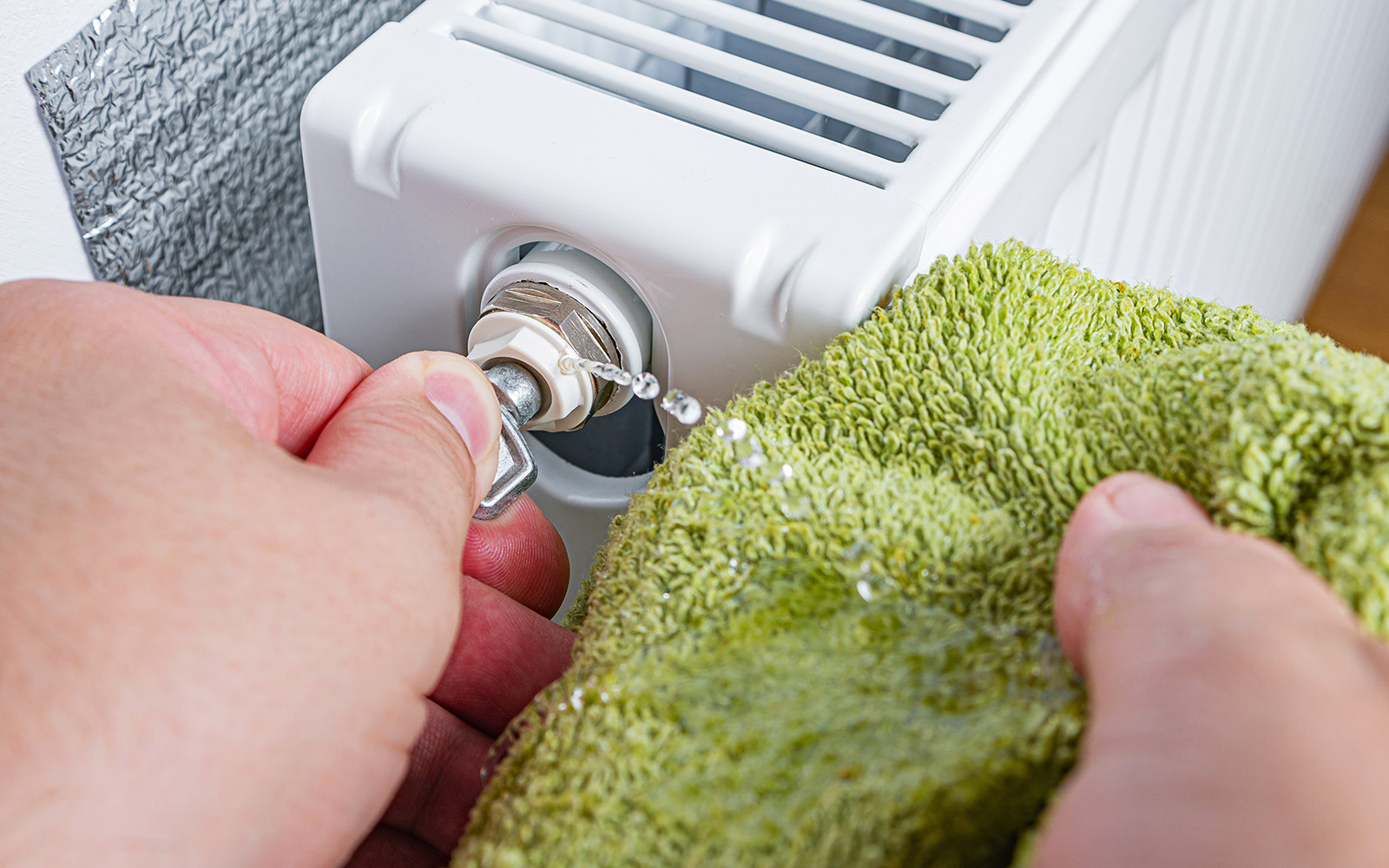
The bleed valve is the small square or flat-head fitting at the top of the radiator, usually at one end. Place your cloth underneath to catch any drips.
Step 5: Open the Bleed Valve
Insert the radiator key and turn slowly anti-clockwise, just a quarter to half a turn. You should hear a hissing sound as trapped air escapes. Do not remove the key or open the valve fully. Keep the cloth ready because once the air escapes, water will follow.
Step 6: Wait for Water to Appear
Hold the key in position and wait. The hissing will stop and a small trickle of water will appear. As soon as water starts dripping steadily, close the valve by turning clockwise until snug. Don't overtighten.
Step 7: Repeat on Any Other Radiators
Move around the house and bleed any other radiators that need it, working from the ground floor upwards and from the radiator nearest the boiler outward.
Step 8: Check Your Boiler Pressure
Bleeding releases water from the system, which can drop boiler pressure. Check the pressure gauge, it should read between 1 and 1.5 bar when cold. If it's below 1 bar, repressurise via the filling loop (see below).
Step 9: Turn the Heating Back On
Once you've bled all necessary radiators and checked pressure, turn the heating back on and confirm the previously cold spots are now heating evenly.
How to Top Up Boiler Pressure After Bleeding
If pressure has dropped below 1 bar, use the filling loop, a braided hose usually located underneath the boiler:
- Make sure the heating is off and the system is cool
- Open both filling loop valves slowly until you hear water entering the system
- Watch the pressure gauge and stop at 1–1.5 bar
- Close both valves firmly
- Turn the heating back on
If your boiler pressure keeps dropping regularly, call a registered heating engineer.
How Often Should You Bleed Your Radiators?
Once a year is a good habit, ideally at the start of the heating season in autumn. If cold spots develop mid-season, bleed as needed.
Frequently Asked Questions
This is usually sludge, a build-up of rust and debris that settles at the bottom and blocks circulation. Bleeding won't help; this requires a power flush from a heating engineer.
Yes, the system is under pressure when on and water can spray out forcefully. Always turn off and let cool slightly first.
The valve may be stuck or scaled up. Don't force it. If a quarter turn produces nothing, try a very slight further turn. If still nothing, it may need a plumber.
As soon as water starts trickling steadily from the valve, close it. A few drips is fine, you don't need a flow of water.
There may be a leak somewhere in the system. This should be checked by a registered heating engineer.
Get What You Need from MacBlair
MacBlair stocks radiator bleed keys, plumbing fittings, and a full range of heating and plumbing supplies across our Northern Ireland branches. If you're doing more than just bleeding such as replacing a radiator, fitting a new valve, or adding to your system, our teams are happy to help. Visit your nearest branch or browse our plumbing and heating range at macblair.com