



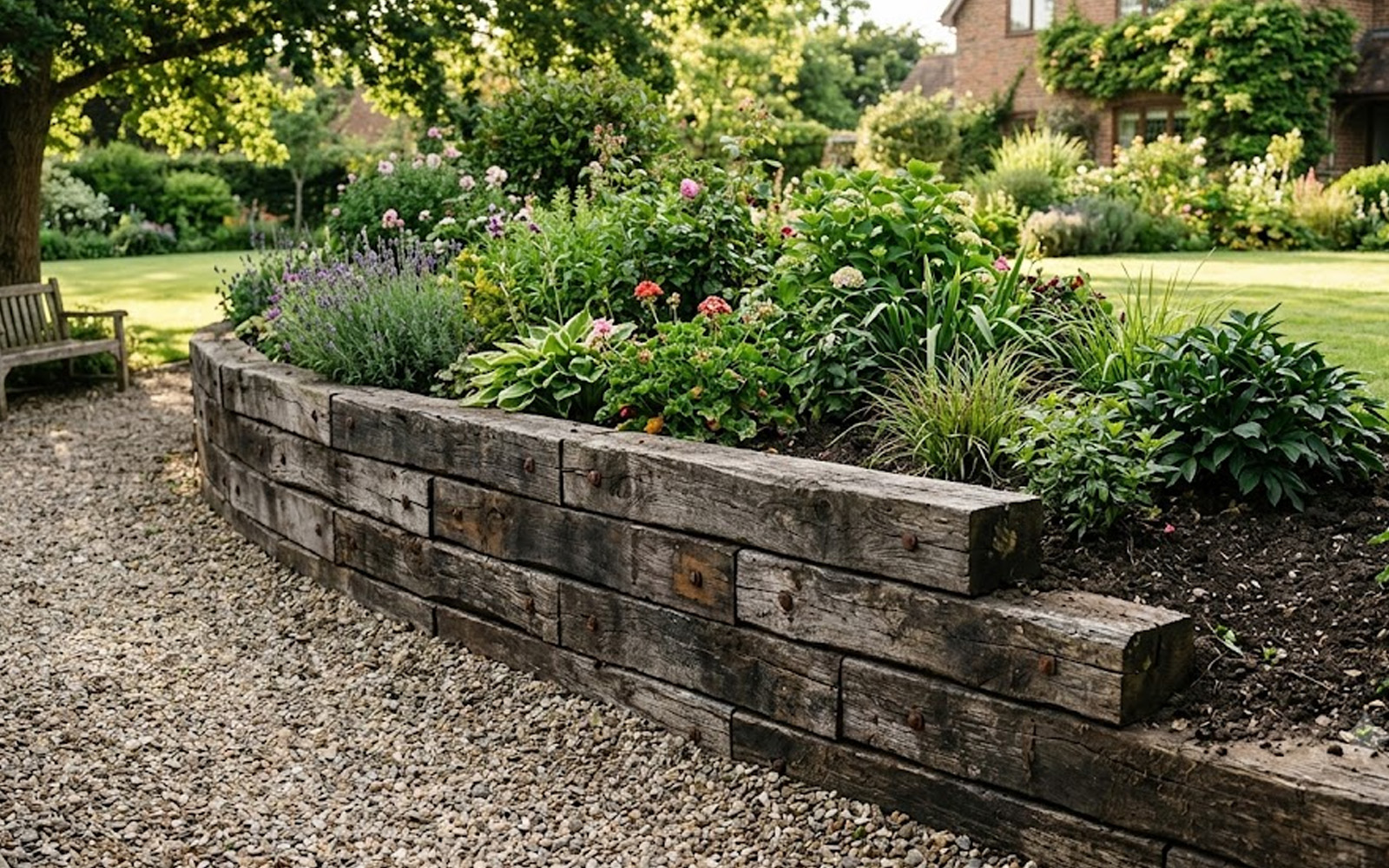
Railway Sleepers in the Garden: 10 Creative Ideas and How to Use Them
Railway sleepers are one of the most versatile materials you can put in a garden. They’re structural enough to hold back tonnes of earth, attractive enough to leave on show, simple enough to install with hand tools, and inexpensive compared with stone or concrete walling. They’ve become a staple of NI garden design over the past decade, and for good reason.
This guide pulls together ten of the best uses for railway sleepers in the garden, with the practical tips that make each project work. Whether you’re after a single afternoon job or a full garden makeover, there’s something here for every level.
Choosing your sleepers
Three main types are stocked across NI:
- New softwood (treated): The cleanest, lightest option. Pressure-treated for outdoor use. 15–20 year life. Best for raised beds and visible features.
- New oak / hardwood: Premium price, beautiful look, extremely durable (20–30+ years). For statement projects and retaining walls.
- Reclaimed: Authentic character. Some still contain creosote. Avoid using around vegetables, kids’ play areas, or where they touch food crops.
1. Classic Raised Vegetable Beds
The most popular use of sleepers in NI gardens. A single course of sleepers stacked one high makes a 200mm raised bed, two courses gives you 400mm, the sweet spot for vegetables, herbs and cut flowers. Use 100mm timber screws to fix the corners and add a metal post inside the back face for stability if you’re going more than two courses high. See our full step-by-step guide for the build process.
2. Low Retaining Wall on a Slope
Sleepers are excellent for retaining low banks, anything up to about 600mm. Lay one course horizontally with the back face dug into the slope, then add a second course offset by half a sleeper length for a bonded pattern. Pin into the ground with 1m steel pins driven through pre-drilled holes for stability. Drainage gravel behind the sleepers stops water pressure building up.
3. Garden Steps
Cut sleepers into 1.2–1.5m lengths, set into a slope with the riser face vertical and the tread face level, and you have garden steps that will last decades. Pin each step into the ground with steel pins and back-fill with gravel for drainage. A simple, rugged finish that suits informal gardens.
4. Sleeper Edging for Lawns and Paths
Half-sleepers (or full sleepers cut lengthways) make a robust, weatherproof edge to lawns, gravel paths and driveways. Set with the long edge level with the lawn or path surface, then back-fill behind to hide the body of the sleeper. Stops grass migrating into paths and gives a clean architectural line.
5. Statement Bench
Two short sleeper offcuts on end (450–500mm tall), capped with a single long sleeper as the seat, makes a permanent garden bench. Fix with 200mm timber screws into pre-drilled holes from underneath. Brutally simple, hugely effective. Soften with cushions in summer.
6. Sandpit or Play Area Border
A square or rectangular border of sleepers a single course high makes a perfect contained sandpit, bark-mulch play area, or trampoline pit. New softwood sleepers only, never reclaimed (creosote risk near children). Round off any exposed corners with a router or hand plane.
7. Outdoor Kitchen / BBQ Surround
Sleepers stacked two or three courses high make a robust frame for a built-in BBQ or pizza oven. Build the walls with sleepers as you would for a raised bed, then drop in a tiled or paved worktop and add a built-in BBQ unit. Add a sleeper-built bench alongside for seating and you’ve created the centrepiece of an outdoor kitchen.
8. Vertical Sleeper Screen or Fence
Sleepers set vertically into post-mix concrete, side by side, make a striking solid fence or privacy screen. Allow 400–500mm of the sleeper underground (set in concrete), with around 1.5–1.8m above ground. The end result is unusual, weighty and full of character, a great choice for screening a hot tub or garden office.
9. Pond or Water Feature Surround
A square sleeper frame, two or three courses high, lined with a pond liner makes a striking raised pond. The wood softens the look of a formal pond shape and gives a deep edge to plant overhanging marginals into. Add a small recirculating pump and you have a feature that costs a fraction of a built stone water feature.
10. Sleeper Pergola or Gateway
Two vertical sleeper posts capped with a horizontal sleeper across the top makes a heavyweight pergola or garden gateway. Plant climbing roses, wisteria or clematis at the base and let them weave up. Far more substantial-looking than a standard timber pergola and a project you can complete in a single weekend.
Tools and Fixings You’ll Need
Most sleeper projects use the same basic kit:
- Spade and shovel for groundworks
- Spirit level and string line
- Cordless drill plus long timber drill bits
- 100mm and 200mm timber screws (or sleeper screws)
- Steel ground pins for retaining walls
- Postcrete or post-mix concrete for vertical sleepers
- Wrecking bar or pry bar for adjusting positioned sleepers
- Hand saw, reciprocating saw or chainsaw for cuts
Practical Tips Before You Start
- Pre-drill everything: Sleepers split easily without pilot holes. Always pre-drill before screwing in 100mm+ timber screws.
- Two people minimum: A single new oak sleeper weighs around 60kg. Don’t try to manhandle one alone.
- Check the levels: A spirit level on every course makes the difference between sleepers that look intentional and sleepers that look thrown together.
- Allow for drainage: Anything holding back soil needs drainage gravel behind it, the same principle as a built retaining wall.
- Treat the cut ends: On treated softwood, paint the cut ends with end-grain preserver. The factory treatment doesn’t fully penetrate the centre of the sleeper.
Frequently Asked Questions
New treated softwood sleepers last 15–20 years in NI conditions. New oak lasts 20–30 years or more. Reclaimed creosote-treated sleepers can last 30–40 years but bring chemical and aesthetic compromises.
No. Most reclaimed sleepers are treated with creosote, which can leach into the soil and is no longer permitted for residential use. Always use new treated softwood or oak around food crops.
A standard 2.4m new softwood sleeper weighs around 40kg. New oak weighs around 60–70kg. Always lift with two people.
Not normally for low garden retaining walls (under 1m). Anything over 1m, or holding back significant soil near a boundary, may need permission and structural advice.
MacBlair stocks new treated softwood and oak sleepers across NI branches. Talk to our team for advice on quantities, sizes and delivery.
Build Your Sleeper Project With MacBlair
MacBlair stocks new softwood and oak sleepers, sleeper screws, ground pins, drainage gravel and the timber tools you need to make these projects work. Visit your nearest branch with your project plan and our team will help you work out the sleeper count, fixings and any extras.