



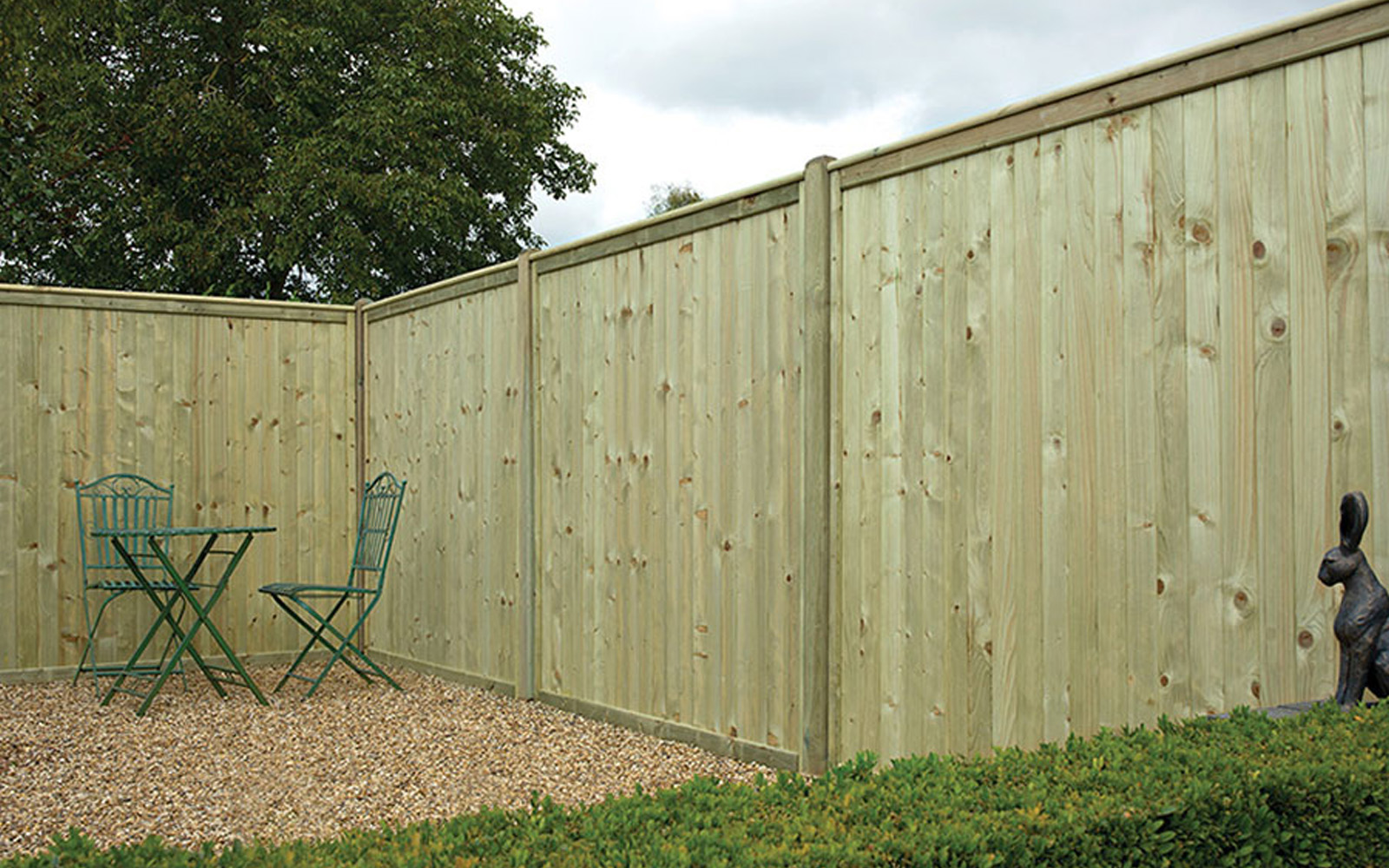
Garden Fencing Ideas: Types, Styles and What to Choose
A garden fence does three jobs at once: it marks a boundary, screens for privacy, and shapes the look of the garden. Get it right and the fence becomes a backdrop you barely notice; get it wrong and it dominates the entire space.
The range of fencing available in Northern Ireland today, from traditional hit-and-miss to modern composite slats, means there's a style that suits every garden and every site. But in NI, the wind changes everything. A fence style that works perfectly in a sheltered English garden can be flat on the ground after the first serious winter storm here.
This guide covers ten popular fence styles with practical notes on what works in NI conditions.
The Big Four Decisions
Before choosing a style, pin down these four things:
- Style: Hit-and-miss, closeboard, slatted, lap panel, picket, trellis, or something else.
- Material: Pressure-treated softwood, composite, hardwood or steel.
- Height: 1.8m is standard for back gardens; 1.2m for front gardens or boundaries adjacent to a road.
- Finish: Leave natural, stain, paint or oil. Composite needs no treatment at all.
1. Hit-and-Miss Fence
The most popular fence style in Northern Ireland, and for good reason. Hit-and-miss fencing uses vertical boards fixed to one side of horizontal rails , with deliberate gaps between each board. This is what makes it so well-suited to NI's climate: wind passes through the gaps rather than pushing against a solid surface, putting far less load on the posts and rails in a storm.
Despite the gaps, hit-and-miss still provides good privacy as the boards are spaced so you can't see straight through from any normal viewing angle. The rails are visible from the back, so it has a clear front and back face, but the open structure means it performs far better than solid styles on exposed and windy sites.
If you're fencing an exposed garden, a coastal plot, or anywhere in NI that gets sustained winter winds, hit-and-miss should be your first consideration.
2. Close-Board Fence
Vertical boards fixed to horizontal arris rails, built board by board on site. Close-board is the most durable timber fence you can build, it's individually repairable, handles uneven ground well, and lasts significantly longer than prefabricated panels.
It's a good choice for sheltered back gardens where full privacy is the priority, but on exposed sites the solid surface creates significant wind loading. If your garden gets serious wind, hit-and-miss is the better choice. If your garden is sheltered and you want the longest-lasting timber boundary, close-board is hard to beat.
3. Lap Panel Fence
Standard overlapping board panels in 1.83m wide sections, fixed between posts. The quickest fence to install and the simplest to replace section by section. Lap panels are fine for sheltered gardens and mid-terrace back gardens where wind exposure is low.
On exposed NI sites, lap panels are the most vulnerable fence style as they present a large, rigid surface to the wind with no flex and no way for air to pass through. If your garden is open or elevated, go for hit-and-miss or another open-style fence instead.
4. Modern Horizontal Slatted Fence
Horizontal slats with even spacing between them. The current trend in NI gardens, looks contemporary, particularly in charcoal or natural hardwood tones. The gaps between slats allow some wind through, making it more resilient on exposed sites than a solid panel.
Works well with anodised aluminium or steel posts for a modern finish, or timber posts for a more traditional setting. The horizontal lines make a garden feel wider, which is useful in narrow plots.
5. Picket Fence
Short vertical pickets with gaps between, typically 900mm to 1.2m high. The traditional choice for front gardens which defines the boundary without screening the view. Painted white is the classic look but dark grey, anthracite and soft sage are popular alternatives to match modern door and render colours.
Because of the gaps and lower height, picket fences handle wind well and are a practical choice for exposed front gardens.
6. Composite Slatted Fence
Composite slatted panels deliver a modern horizontal look without any annual maintenance, no staining, no oiling, no warping. They're made from a wood-fibre and polymer composite that holds its colour and shape for decades. The gaps between slats also help on windy sites.
The upfront investment is higher than timber, but over the lifetime of the fence the maintenance saving is considerable. Pair with anodised aluminium posts for a clean contemporary finish.
7. Trellis Topper
Not a fence style on its own, but a simple way to add height and interest to an existing solid fence. A 300–600mm trellis section fixed on top of a 1.5m fence gives extra privacy without making the boundary feel oppressive.
Climbing plants such as clematis, jasmine and climbing roses soften the look over a season or two. A small addition with a big visual impact.
8. Hedging Combined with Fencing
A solid fence with a hedge planted in front on the garden side softens the look considerably. The fence does the boundary and weather-screening work; the hedge adds depth and interest. Beech, hornbeam, yew or laurel all work well in NI conditions.
This combination also adds a layer of wind protection as the hedge buffers wind before it reaches the fence, reducing the load on the structure over time.
9. Decorative Garden Screen
A freestanding screen within the garden, not on the boundary, used to divide a space or create a focal point. Slatted timber, laser-cut steel, or woven willow screens are popular for separating a dining area from a play area, hiding oil tanks , or screening a bin store.
These don't need to be tall, 1.5m is usually enough to create the sense of separation without blocking light.
10. Painted Feature Fence
A small section of fence, typically the rear boundary, painted in a striking colour becomes a backdrop rather than just a boundary. Deep navy, forest green and warm charcoal all work well behind planted borders. The colour draws the eye to the far end of the garden, which makes even a modest plot feel more designed and intentional.
Use exterior-grade fence paint for durability and expect to repaint every few years in NI's wet climate.
Materials at a Glance
- Pressure-treated softwood: The most widely used material for fencing in NI. Suits hit-and-miss, close-board, picket and lap panel styles. Needs annual staining or oiling to maintain protection. Widely available, workable and repairable.
- Composite: Best suited to horizontal slatted styles. Maintenance-free and long-lasting. Look for UV-stable, non-hollow profiles for NI's wet winters.
- Hardwood (iroko, oak): Premium choice for slatted and close-board styles. Lasts well with annual oiling to maintain colour. Naturally durable without treatment but oil keeps it looking its best.
- Powder-coated steel: Mainly used for railings, contemporary garden screens and post systems paired with timber or composite panels. Effectively maintenance-free. Available in a wide range of RAL colours.
Posts Matter as Much as Panels
The single biggest cause of fence failure in NI is post failure, not panel failure. Whatever style you choose, getting the posts right is the most important part of the whole job.
- Concrete posts: Slot panels directly in, longest lifspan, no rot risk, slightly utilitarian in appearance
- Pressure-treated timber posts in concrete: The most common choice, suit all timber fence styles
- Steel post anchors with timber above ground: Avoids ground-contact rot at the post base
- Bolt-down / spike-in supports: Quickest to install but less robust on exposed NI sites
For more on post installation, see our guides to How to Build a Panel Fence and How to Build a Close-Board Fence.
Frequently Asked Questions
Hit-and-miss fencing is the most popular choice across NI. The gaps between the boards let wind through rather than catching it, which makes it far more resilient in our exposed, windy climate than solid panel or close-board styles. It's a one-sided fence, the boards are fixed to the front face and the rails are visible from the back, but the open structure is exactly what NI conditions demand.
Up to 2 metres without planning permission elsewhere on your property, or 1 metre next to a road. Higher fences require planning permission. Conservation areas and Article 4 directions can impose stricter limits. Check with your local council if you're unsure.
Pressure-treated softwood lasts 15–20 years with regular staining or oiling. Without treatment, expect problems to develop earlier, particularly on posts and gravel boards. Posts often fail before panels in NI's wet conditions.
No, you don't need permission for a fence entirely on your own land. It's good practice to discuss it beforehand, particularly regarding which side faces the neighbour. Check your title documents to confirm the boundary position before starting.
Plan Your Fence with MacBlair
MacBlair stocks hit-and-miss boards, featheredge boards, lap panels, composite panels, posts in timber and concrete, gravel boards, arris rails and all the fixings and treatments you need, across branches throughout Northern Ireland.
Bring your boundary measurements into your nearest branch and our team will help you choose the right style and work out quantities.