



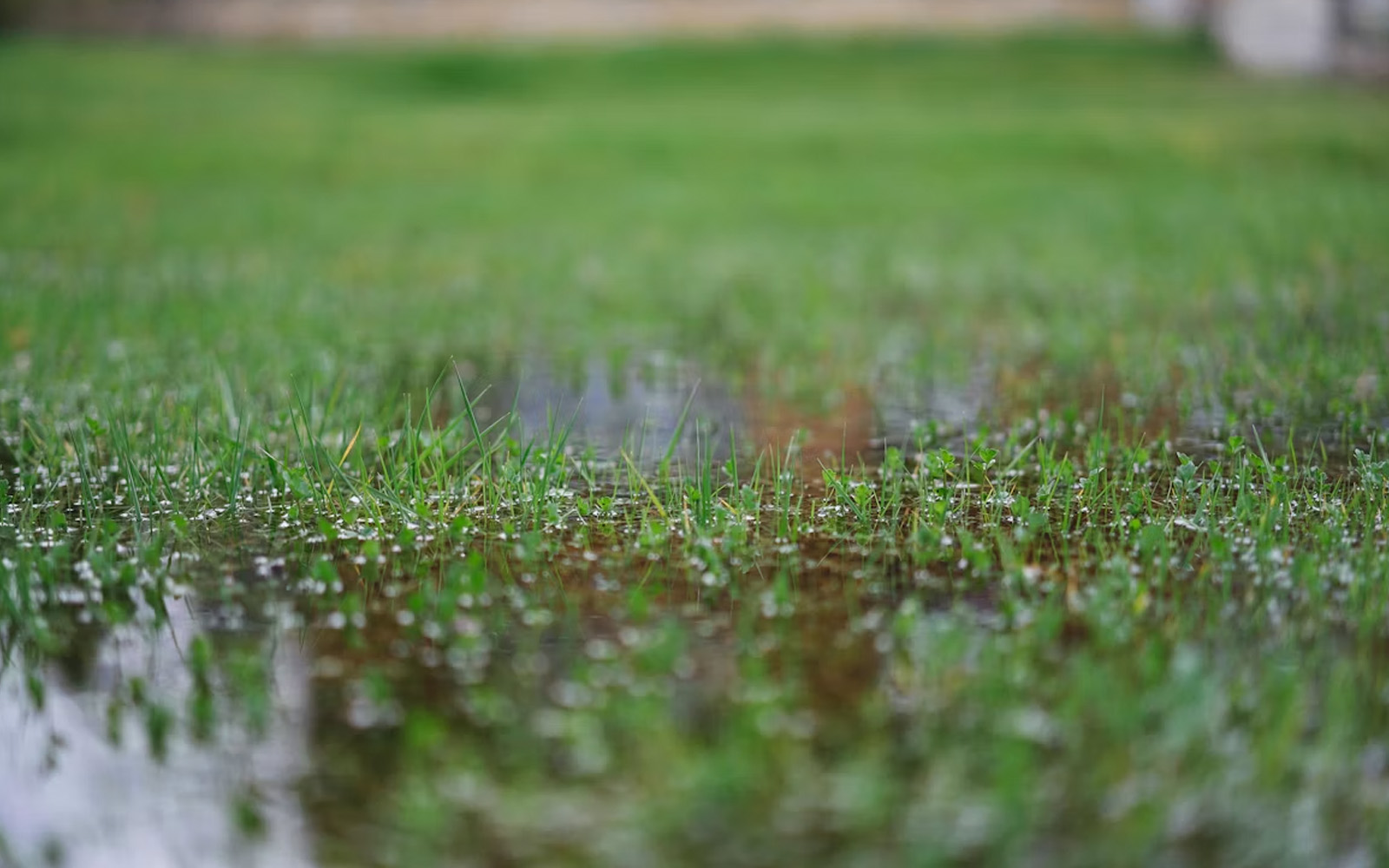
Garden Drainage Solutions: How to Fix a Waterlogged Garden
Standing water on the lawn after every shower. Boggy borders that never quite dry out. Patios that puddle, fence posts rotting at the base, and lawn that goes from green to yellow to bare patch over a single wet winter. If any of that sounds familiar, you have a garden drainage problem, and you’re far from alone.
Northern Ireland is one of the wettest parts of the UK. We get over 1,100mm of rain in a typical year, and a lot of it falls on heavy, slow-draining clay soils. That combination of wet weather and clay is the reason waterlogged gardens are so common across NI.
The good news is that most garden drainage problems are well within reach of a competent DIYer. This guide walks you through identifying the cause, choosing the right drainage solution, and installing a French drain step by step, the most reliable fix for general garden waterlogging. We’ll also cover when a soakaway is the right call, when it isn’t (heavy clay being a big factor), and the regulations you need to know before you dig.
Before You Start
UK Building Regulations (Part H) and NI guidance set out a few rules for garden drainage you need to follow:
- Soakaways must be at least 5 metres from any building and at least 2.5 metres from a neighbour’s boundary.
- Surface water (rainwater) must never be connected to the foul sewer, it’s illegal under Building Regulations and overloads the system.
- If you’re discharging to a watercourse, ditch or shared drain, check with NI Water or DAERA before you start.
- Soakaways are not a workable solution in heavy clay soils where the ground can’t absorb water at any reasonable rate. A French drain to a different outlet is usually a better route.
Why Your Garden Is Waterlogged
Before you pick a fix, work out what’s actually causing the problem. Most NI gardens are wet for one or more of the reasons below.
- Heavy clay soil: Common right across Northern Ireland. Clay holds water and drains slowly. After heavy rain it can stay saturated for days.
- Soil compaction: Years of foot traffic, kids, dogs and lawnmowers compress the soil structure. Compacted soil can’t absorb water, so it runs off or sits on the surface.
- No drainage fall: If your garden is flat, or worse, slopes back toward the house then water has nowhere to go. Patios laid without a fall away from the house are a classic example.
- Blocked or damaged existing drainage: Land drains, downpipes and gullies can silt up or collapse over the years. Check your downpipe outlets are actually draining somewhere sensible.
- High water table: In low-lying parts of NI, the natural water table sits close to the surface for much of the winter. There’s a limit to what drainage can fix here, but it can still help.
- Run-off from neighbouring ground or paving: New driveways, extensions and patios next door can redirect water onto your lawn without anyone realising.
What You’ll Need
Get everything on site before you start. The list below is geared toward installing a French drain, the most common DIY drainage fix, but most of these tools and materials also cover land drains and soakaway projects.
| Tools | Materials |
|---|---|
Quick Fixes Before You Dig
Not every wet garden needs a full drainage system. If your problem is moderate such as a soggy lawn rather than standing water then try these lower-effort fixes first.
- Aerate the lawn: Use a hollow-tine aerator to pull plugs of soil out of the lawn. Brush sharp sand or horticultural grit into the holes. Repeated each autumn, this opens up clay soil over time.
- Top-dress with sharp sand: A thin top-dressing of sharp sand and compost (mixed 70:30) brushed across the lawn helps water move down through the surface.
- Redirect downpipes: If a downpipe empties onto your lawn or near a fence, fit a flexible extension and route it to a soakaway, water butt or surface drain. Often the single biggest improvement in a small garden.
- Plant for wet ground: In permanently damp areas, plants like dogwood, astilbe, iris and ferns will thrive where grass struggles. Sometimes the easiest fix is to work with the wet rather than against it.
Garden Drainage Solutions Compared
If a quick fix isn’t enough, you’ll need to install proper drainage. Here are the main options and where each works best.
- French drain: A gravel-filled trench with a perforated pipe at the bottom that collects and redirects water. The most versatile fix for waterlogged lawns and borders. Works well in clay if you have a sensible outlet to direct the water to.
- Soakaway: A pit (or modular crate system) filled with gravel that lets collected water slowly soak into the surrounding ground. Excellent for downpipes on free-draining soils. Not recommended in heavy clay as the water has nowhere to go.
- Channel drain: A linear surface drain set flush with paving or driveways. The right choice for run-off from patios, driveways and low thresholds. Discharges into a soakaway or French drain.
- Land drains (herringbone): A network of perforated pipes laid across a large lawn in a herringbone pattern, all feeding to a single outlet. The right call for big lawns with extensive waterlogging.
- Raised beds: Where you simply can’t fix drainage in a planting area, raised beds with free-draining topsoil are the practical answer.
- Permeable paving: A preventative measure rather than a cure. Permeable block paving and gravel let water soak through instead of running off, worth considering for any new patio or driveway in NI.
How to Install a French Drain: Step by Step
A French drain is the right answer for most waterlogged NI gardens. Work through the steps below in order. The most important part is the fall, if water can’t flow downhill through the pipe, the system won’t work.
STEP 1: PLAN THE ROUTE AND THE OUTLET
Identify the wettest area of your garden, that’s where the drain starts. Then pick an outlet: a soakaway in free-draining ground at the bottom of the garden, an existing surface water drain, a watercourse, or a lower neighbouring boundary you’re entitled to discharge to. Mark the route with marker spray paint. You need a continuous fall of at least 1:100 (10mm per metre) from the start to the outlet. Without that fall, the drain won’t flow.
STEP 2: DIG THE TRENCH
Dig a trench around 300mm wide and 600mm deep along your marked route. In hard clay, a mattock or pickaxe makes the work much faster. For longer runs, hiring a mini-digger for the day is well worth it. Check the fall as you go with a long spirit level and a straight piece of timber. Adjust the depth so the bottom of the trench drops by at least 10mm for every metre of length.
STEP 3: LINE THE TRENCH WITH GEOTEXTILE
Lay a permeable geotextile membrane along the bottom and up the sides of the trench, with enough overlap to wrap over the top later. The membrane keeps fine soil and silt out of the gravel and pipe. Without it, the drain will silt up within a couple of seasons.
STEP 4: ADD A GRAVEL BASE
Spread 50–100mm of clean 20mm gravel along the bottom of the trench. Don’t use sharp sand or builder’s ballast here as the drain relies on the open structure of clean gravel to let water move freely.
STEP 5: LAY THE PERFORATED PIPE
Lay an 80mm or 100mm perforated land drainage pipe along the gravel base. The holes should face down, water enters through the gravel from below, and the open bottom of the pipe carries it to the outlet. Connect to your outlet (soakaway, surface drain or watercourse) before backfilling. If your run is longer than 10 metres or has a bend, fit a rodding eye or small catchpit at a sensible point. It lets you flush or rod the pipe years down the line if it ever silts up.
STEP 6: BACKFILL WITH GRAVEL
Continue filling the trench with 20mm gravel up to around 50mm below ground level. Once the trench is full, fold the geotextile membrane over the top of the gravel, this seals the gravel inside the membrane and stops topsoil migrating in.
STEP 7: TOP WITH SAND, SOIL AND TURF
Finish with a thin layer of sharp sand, then topsoil and turf (or grass seed). For a French drain running across a lawn, the finished line should be invisible within a few weeks. For drains in borders, a gravel-topped strip can be used as a feature instead.
Common Mistakes to Avoid
- Not enough fall: The single most common reason a French drain doesn’t work. Aim for at least 10mm per metre and check it as you dig.
- Pipe holes facing up: Land drainage pipe is designed to take water in through gravel and carry it out through the open bottom. Holes face down.
- No geotextile membrane: Skipping the membrane is a false economy. Without it, silt clogs the gravel and pipe and the drain stops working in a couple of seasons.
- Building a soakaway in clay: In heavy clay the water can’t soak away, so the soakaway just becomes a hidden puddle. A French drain to a different outlet is the right answer.
- Connecting to the foul sewer: Illegal under Building Regulations. Surface water must go to a soakaway, surface water drain or watercourse, never the foul system.
Frequently Asked Questions
Around 600mm is standard for general garden drainage, deep enough to intercept water moving through the topsoil and shallow subsoil. For drains around foundations or wet patios, you may need to go deeper to match the level you’re draining from.
Generally no for a domestic rainwater soakaway, but it must comply with Part H of the Building Regulations: at least 5m from any building and 2.5m from a boundary. New-build properties typically need a soakaway designed to a percolation test. Check with your council if you’re in any doubt.
In most NI clay soils, no. The water can’t soak away fast enough for a soakaway to work. A French drain that discharges to a surface water drain, watercourse or lower boundary is usually the right alternative.
Properly installed with a geotextile membrane, a French drain can work effectively for 20–40 years. Skipping the membrane or using sand instead of clean gravel will cut that down to a handful of seasons.
Late summer to early autumn is ideal. The ground is at its driest, trenches stay open, and the new system has time to settle before winter rainfall really tests it. Avoid mid-winter as digging waterlogged clay is miserable work and the trench walls collapse.
Get Your Drainage Materials from MacBlair
MacBlair stocks everything you need for a garden drainage project: perforated land drainage pipe, geotextile membranes, clean gravel, soakaway crates, channel drains, and all the tools you need for the job. Our team across our Northern Ireland branches can help you size your drain, calculate quantities, and make sure you have everything before you start digging. Visit your nearest MacBlair branch or browse our landscaping and drainage range online at macblair.com.
→ Shop Drainage & Landscaping Supplies at Macblair.com