



Choosing the Right Ladder: A Buyer's Guide for DIYers and Tradespeople
Ladders are one of those purchases people tend to under-think, until they're up one that's wrong for the job. The right ladder makes work safer and easier. The wrong one is at best frustrating, at worst dangerous. This guide covers the main types of ladder, how to choose the right one for your job, and what to look for in terms of safety ratings and build quality.
The Main Types of Ladder
Step Ladders
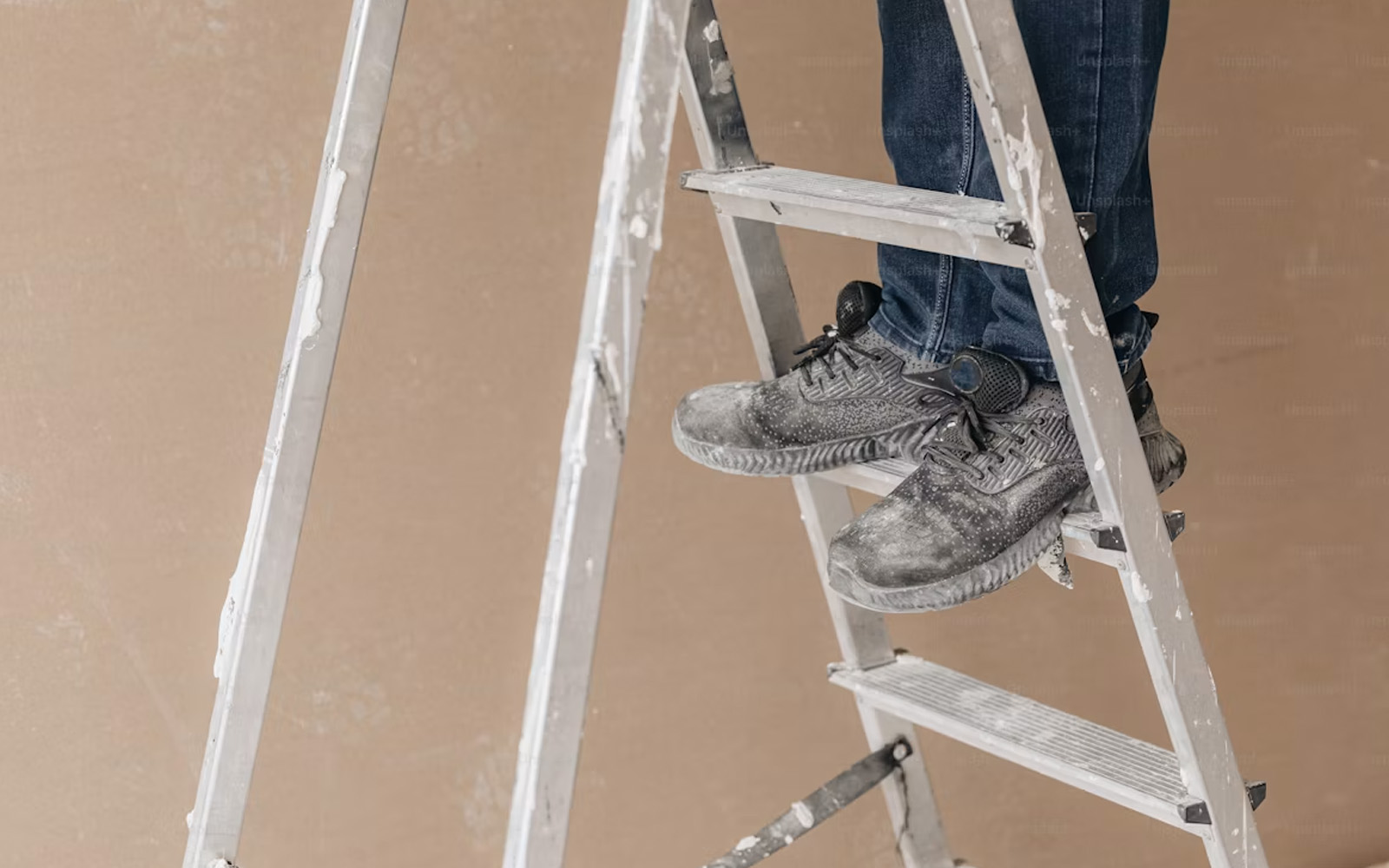
A step ladder is self-supporting and doesn't need a wall to lean against. That makes it the most versatile option for indoor work: decorating, fitting light fixtures, accessing loft hatches, working in rooms where you can't lean a ladder against anything useful. Step ladders are measured by the number of steps. A 6-step ladder reaches a working height of around 2.4m; a 10-step reaches around 3.5m. The top step and top platform are generally not meant to be stood on. Always check the manufacturer's guidance.
Best for: indoor decorating and DIY, kitchens, hallways, loft access.
Extension Ladders
An extension ladder leans against a wall and extends to height. These are the go-to for exterior work such as painting, gutters, roof access, working at height on a building exterior. A rough guide: for a 5m working height, you need at least a 6m ladder.
Best for: exterior work, gutters, roof access, rendering and plastering external walls.
Multi-Purpose Ladders
A combination ladder can be configured in multiple ways: as a step ladder, an extension ladder, a staircase ladder (with uneven legs for use on stairs), or scaffold trestles. They're heavier and more expensive but offer genuine versatility which is a good combination ladder replaces two or three separate ladders.
Best for: tradespeople and serious DIYers who need multiple configurations; access on stairs.
Roof Ladders / Cat Ladders
A roof ladder hooks over a ridge and allows safe movement on a sloped roof surface. Essential for any work on roof tiles, flashing, chimneys, or skylights. Never work on a roof slope without a proper roof ladder.
Best for: roof tile replacement, chimney work, flashing repairs, skylight fitting.
What Height Ladder Do You Need?
The single most common mistake when buying a ladder is underestimating the height needed. Always work backwards from your task:
- Working height = the highest point you need to comfortably reach while standing on the ladder.
- Step ladders: working height is roughly step count × 0.25m, up to the safe standing step
- Extension ladders: working height is roughly the extended length minus 1.5m
Always buy slightly more ladder than you think you need. Stretching to reach on a ladder is one of the leading causes of falls.
Load Ratings: EN131 and What It Means
All ladders sold in the UK must comply with EN131, the European ladder safety standard. Within EN131, there are two grades:
- EN131 Professional (Class 1): Rated to 150kg. Designed for professional, trade and industrial use. The right choice for regular, on-site use.
- EN131 Non-Professional (Domestic): Rated to 125kg. Suitable for occasional domestic use. Not appropriate for trade or commercial use.
The load rating includes you, your clothing, your tools and any materials you're carrying. If you're a tradesperson, always buy Professional grade.
Material: Aluminium vs Fibreglass
- Aluminium: Lightweight, rust-resistant, and the most common choice for general use. The standard option for most DIY and trade applications.
- Fibreglass: Heavier and more expensive, but non-conductive. Essential if there's any risk of contact with electricity, for electricians, anyone working near overhead lines, or work on electrical panels and switchgear. If in doubt, use fibreglass.
Ladder Safety: The Basics
- Angle: Extension ladders should be pitched at 75°, roughly 1 unit out from the wall for every 4 units of height.
- Footing: Both feet must be on firm, level ground. Use a ladder leveller on uneven surfaces. Never rest a ladder on guttering.
- Three points of contact: Always maintain two hands and one foot, or two feet and one hand, on the ladder when climbing.
- Securing: For extension ladder work over 3m, secure the top with a ladder stay or have someone foot the ladder at the bottom.
- Inspection: Check your ladder before every use. Bent or cracked stiles, missing or damaged rungs, worn feet. A damaged ladder should not be used.
Frequently Asked Questions
A combination ladder with adjustable legs set to different heights for upper and lower stair levels. Never use a standard step ladder on stairs.
Generally no, most step ladders mark the top step as unsafe to stand on. Check the label on your specific ladder.
Yes. If there's any risk of contact with live electrical components, use a fibreglass (non-conductive) ladder.
Inspect rungs, stiles, feet and locking mechanisms. If it's showing damage or corrosion, replace it, ladders are not worth repairing.
Get Your Ladder from MacBlair
MacBlair stocks a full range of ladders across our Northern Ireland branches: step ladders, extension ladders, combination ladders, roof ladders and loft ladders, in both aluminium and fibreglass, domestic and professional grade. Visit your nearest MacBlair branch or browse our tools and workwear range at macblair.com