



Gravel for Gardens and Driveways: Types, Sizes and How to Choose
Gravel is one of the most versatile landscaping materials you can use. Low maintenance, excellent for drainage, and available in styles to suit everything from a modern town garden to a traditional cottage setting. But walk into a builder's merchant and you'll find a dozen different types on offer, with varying sizes, shapes and colours that can make choosing feel overwhelming. This guide breaks it down clearly: what the main gravel types are, what size to use for different jobs, and how to calculate how much you need. We've also included specific advice for Northern Ireland conditions, where rainfall, clay soils and winter frost all affect which products perform best.
The Main Gravel Types Explained
Gravel broadly falls into two categories: rounded (naturally weathered river gravels) and angular (crushed stone products). Each has different properties that make it better suited to certain applications.
Pea Gravel
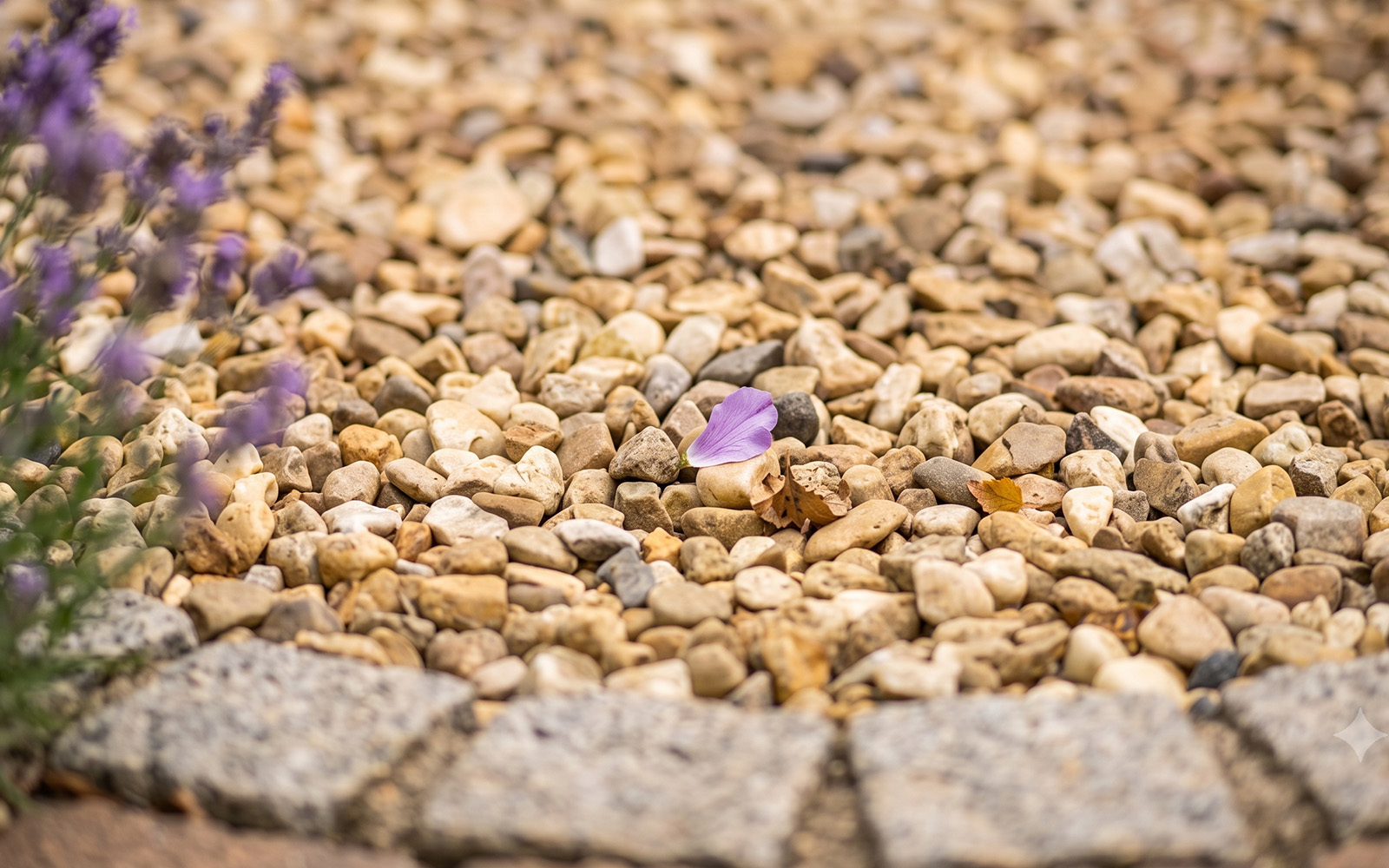
Small, smooth, rounded stones. The most popular decorative garden gravel in Northern Ireland. Naturally available in warm honey, brown and golden tones. Because it's rounded, it shifts underfoot and doesn't compact, which makes it ideal for paths and borders but not for driveways with frequent traffic.
- Typical size: 5–10mm, 10–14mm
- Best for: Decorative borders, low-traffic paths, around trees and shrubs, sensory gardens
Slate Chippings
Flat, angular pieces of Welsh or imported slate. Available in blue-grey, plum and green tones. The angular shape means it locks together better than rounded gravels, so it stays in place more effectively. The dark colour contrasts beautifully with planting and retains heat well, useful in Northern Ireland's cooler climate.
- Typical size: 20–40mm (decorative), 10–20mm (finer coverage)
- Best for: Raised bed mulch, contemporary garden borders, around ornamental grasses, flat roofing ballast
Crushed Limestone / Limestone Chippings
Angular white-grey crushed stone. Packs down to a firm, stable surface when compacted, making it the most popular choice for driveways and hardstanding. It self-binds slightly when wet. Note: limestone raises soil pH over time, so avoid using it as a border mulch around acid-loving plants like rhododendrons or heathers which are common in NI gardens.
- Typical size: 20mm (driveways), 10mm (paths), 6mm (fine finish)
- Best for: Driveways, parking areas, footpaths, sub-base and drainage applications
Cotswold Stone / Golden Gravel
Warm golden-yellow rounded limestone gravel. Popular for cottage-style and traditional garden settings. Similar properties to pea gravel, decorative and easy to work with, but not ideal for heavy-traffic driveways. The warm tones work particularly well in front garden settings.
- Typical size: 10–14mm, 14–20mm
- Best for: Decorative front gardens, paths, around Mediterranean planting schemes
Granite Chippings
Angular crushed granite is extremely hard and durable. Available in grey, silver-grey and pink tones. Excellent for driveways and high-traffic areas where longevity is the priority. Slightly higher cost than limestone but extremely long-lasting. Popular for modern, minimal garden designs.
- Typical size: 20mm (driveways), 10mm (decorative)
- Best for: Heavy-use driveways, contemporary garden borders, commercial applications
Recycled Crushed Concrete / Type 1
Angular crushed and graded recycled aggregate. Not decorative, but extremely cost-effective for sub-base layers, hardcore fill, and utility areas. Type 1 (MOT Sub-base) is the most commonly specified material for under driveways, patios and paths. It compacts to a stable, load-bearing base.
- Typical size: 0–40mm (Type 1), 20mm down
- Best for: Sub-base under block paving, driveways and patios. Hardcore fill. Back-fill for drainage runs.
Choosing the Right Size
Gravel size (measured in mm across the stone) makes a significant difference to how it performs and looks. Here's the practical guide:
| Size | Type | Best Application | NI Notes |
|---|---|---|---|
| 5–10mm | Fine decorative | Borders, tree surrounds, rockeries | Washes into lawns in heavy rain, use edging |
| 10–14mm | Standard decorative | Garden paths, borders, raised bed mulch | Most popular NI garden size, good balance |
| 14–20mm | Medium decorative | Front gardens, driveways (light use) | Stays in place better on sloped sites |
| 20mm | Standard driveway | Driveways, parking areas, paths | Best NI driveway size, drains well, stable |
| 40mm | Large decorative/drainage | Soakaways, French drains, drainage layers | Ideal under raised beds for drainage in clay |
| 0–40mm (Type 1) | Sub-base | Under patios, driveways, paths | Essential NI base layer, prevents frost heave |
Gravel for Driveways: What You Need to Know
Driveways are one of the most common uses for gravel in Northern Ireland. They drain well, require minimal maintenance and cost significantly less than block paving or. Done properly, a gravel driveway will last for many years. Done incorrectly, it can spread across the road, sink into the ground, or become a weed magnet.
Getting the Base Right
The most important factor in a successful gravel driveway is the sub-base. In Northern Ireland, the combination of heavy rainfall and clay soil means ground movement is a real issue, particularly frost heave in winter. A properly prepared base prevents sinking and spreading. The standard specification is: excavate to 200–250mm depth, lay 150mm of compacted Type 1 MOT sub-base, then a 50mm layer of your chosen driveway gravel on top. On very soft or waterlogged ground, lay a geotextile membrane before the Type 1 to prevent the aggregate from being pushed into the subsoil.
Containing the Gravel
Gravel will migrate without edging. Use steel or aluminium edge restraints, treated timber boards, or concrete kerbs to contain the gravel on all sides. The edging should sit slightly above the gravel level to prevent stones from being kicked or driven out onto paths and roads.
Depth of Gravel on a Driveway
50mm of gravel on a finished driveway is the standard. Deep enough to provide cushioning and coverage, shallow enough to avoid wheels sinking. Use 20mm crushed limestone or granite chippings for the best stability. Rounded pea gravel is not recommended for driveways as tyres spin on it and it spreads easily.
NI Drainage Advantage
In an era of increasing heavy rainfall events, gravel driveways have a significant advantage over impermeable surfaces like tarmac and concrete. They are SuDS-compliant (Sustainable Drainage Systems) so that rainwater soaks through rather than running off into drains and watercourses. In Northern Ireland, planning guidance increasingly favours permeable surfaces for new driveways, and gravel naturally meets this requirement.
Gravel for Garden Borders and Paths
Used as a mulch in garden borders, gravel suppresses weeds, retains moisture and creates a clean, low-maintenance finish. Laid on paths, it provides a soft-crunch surface that drains instantly and is ideal for our climate. Here's how to get the best results.
Laying Gravel Paths
Mark out your path with string lines and excavate to 75–100mm depth. Lay a weed suppressant membrane across the full area, pinning the edges. Then add 50–75mm of your chosen gravel, raking level. Edge with treated timber boards or metal edging to keep the gravel in place. For paths that receive regular foot traffic, 10–14mm angular gravel beds down more firmly than rounded pea gravel.
Using Gravel as a Border Mulch
A 50mm layer of slate chippings or decorative gravel around plants in a border suppresses weeds very effectively, reduces soil moisture evaporation in dry spells, and looks smart year-round. Lay on top of weed membrane, leaving a small gap around the base of each plant stem to prevent rotting. Choose lighter-coloured gravels like Cotswold stone or pale limestone for small gardens as they reflect light and make the space feel larger. Darker slate chippings work well in contemporary settings or alongside bold architectural planting like grasses, bamboo and ferns.
Avoiding Common Problems in NI Gardens
The main challenge in Northern Ireland gardens is weed seeds blowing in and germinating on top of the gravel. A good weed membrane underneath significantly reduces the problem, but gravel still needs an annual raking and occasional top-up to maintain coverage. For very sheltered or shaded areas that are prone to moss and algae, choose angular chippings rather than smooth rounded gravel. The angular surface is less hospitable to growth and any treatments applied wash through more effectively.
How Much Gravel Do You Need?
Calculating the right quantity avoids costly shortfalls or expensive surplus. The formula is straightforward:
- Volume (m³) = Length (m) × Width (m) × Depth (m)
- Then convert to tonnes: most gravel and chippings weigh approximately 1.5–1.7 tonnes per cubic metre. Use 1.6 as a standard multiplier.
- Example: A driveway 6m × 4m × 0.05m (50mm depth) = 1.2m³ × 1.6 = approximately 1.9 tonnes of gravel needed.
- Add 10–15% to your calculated quantity to allow for compaction, uneven spreading, and edging wastage.
| Area | Depth | Volume | Approx Weight |
|---|---|---|---|
| 10m² (small path) | 50mm | 0.5m³ | ~0.8 tonnes |
| 20m² (border mulch) | 50mm | 1.0m³ | ~1.6 tonnes |
| 30m² (driveway section) | 50mm | 1.5m³ | ~2.4 tonnes |
| 50m² (standard driveway) | 50mm | 2.5m³ | ~4.0 tonnes |
| 100m² (large driveway) | 50mm | 5.0m³ | ~8.0 tonnes |
| 20m² (with Type 1 sub-base) | 150mm (Type 1) + 50mm gravel | 4.0m³ total | ~5.5 tonnes total |
MacBlair supplies gravel and aggregates in bulk bags (approximately 850kg–1,000kg) and loose tipped loads. For larger projects, a tipped load is the most cost-effective option. Ask at your local branch for current pricing and minimum delivery quantities.
Common Mistakes to Avoid
- Skipping the sub-base. Gravel laid directly on soil, especially clay soil, will sink, shift and become uneven quickly. Always prepare a proper base, especially for driveways.
- Using rounded gravel on driveways. Pea gravel and other rounded stones roll under tyres and spread across the road. Use angular crushed limestone or granite for any driveway application.
- Not using a membrane. Weed membrane under gravel doesn't eliminate weeds entirely but dramatically reduces them. Skipping it means fighting a losing battle within a season or two.
- Wrong gravel size for the job. Fine gravel on a driveway gets pushed into the ground; large angular stone on a barefoot path is uncomfortable. Match the size to the application.
- Limestone near acid-loving plants. Crushed limestone slowly raises soil pH as it weathers. Avoid using it as a mulch around rhododendrons, azaleas, heathers and pieris which all common in Northern Ireland gardens. Use slate or granite chippings instead.
- Under-ordering. Running out of gravel mid-project is frustrating. Order 10–15% more than your calculation suggests and return any unused bags.
Frequently Asked Questions
Not replaced, but occasional top-up is normal. Gravel compacts slightly over time, migrates at edges, and gets displaced by weather and foot traffic. A top-up of 20–25mm every 3–5 years is typical for a well-maintained gravel driveway or border.
Loose gravel on steep slopes will migrate downhill over time. For slopes greater than 1:10, consider using resin-bonded gravel (stone set in a clear resin binder), or install a grid system (plastic honeycomb cells filled with gravel) that holds the stones in place. Ask at MacBlair for suitable products for sloped sites.
Cats prefer fine, loose, dry material. Coarser angular chippings (20mm+) are less inviting. Planting densely so there are fewer bare gravel patches also helps, as does placing prickly branches or specific cat-deterrent plants like Coleus canina ('Scaredy Cat plant') at intervals along the border.
Yes, with some caveats. The hard surface needs to drain freely. If water pools on it, laying gravel on top will create a wet, boggy mess. Ensure there are drainage channels or the existing surface slopes to a drain before adding gravel on top. Edge restraints are essential to stop the gravel migrating off the hard surface.
The terms are often used interchangeably, but technically shingle refers specifically to naturally water-worn rounded stones from beaches and riverbeds, while gravel is a broader term covering both rounded and crushed angular stones. For practical purposes in landscaping, the distinction rarely matters. What matters more is size and shape (rounded vs angular).
Ready to Order Your Gravel?
MacBlair stocks a full range of decorative gravels, chippings, Type 1 sub-base and landscaping aggregates are available in bulk bags or loose loads from our branches across Northern Ireland. Visit macblair.com or call into your nearest branch for expert advice and competitive trade pricing.