



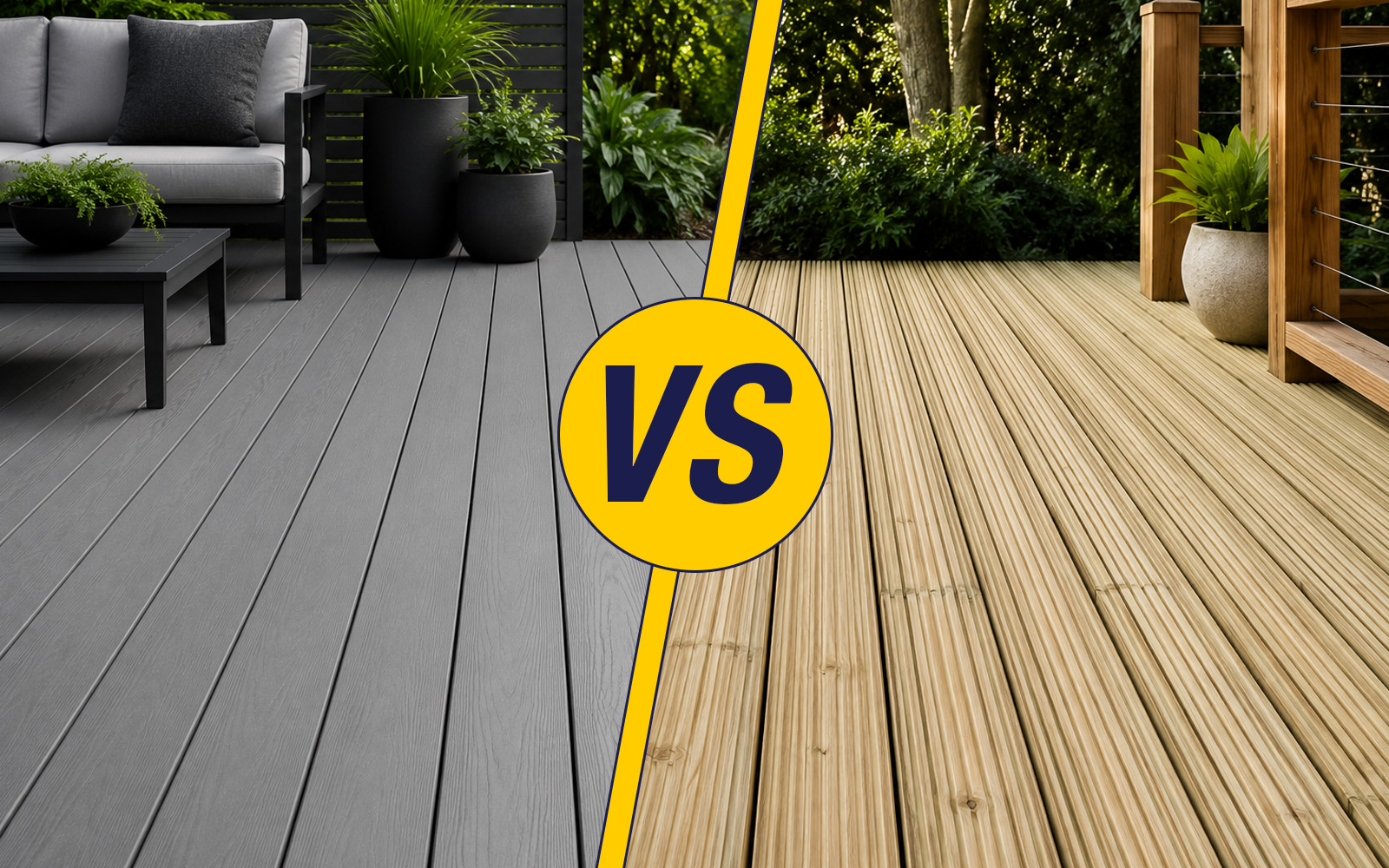
Composite Decking vs Timber Decking: Which Is Better for Your Garden?
Decking transforms a garden. A well-built deck extends your living space outdoors, adds real value to your home, and if done right, will give you years of enjoyment for relatively little ongoing effort.
The first decision most people face is the same one: composite or timber? Both will build you a perfectly good deck. But they behave very differently over time, and the right choice depends on your priorities, your budget, and especially in Northern Ireland, your local climate.
This guide gives you an honest comparison of both materials so you can make the right call for your garden before you spend a penny.
What Is Composite Decking?
Composite decking is made from a blend of wood fibre and recycled plastic, pressed into boards that look like timber but behave very differently. The wood fibre gives it a natural appearance and feel; the plastic content makes it resistant to moisture, rot and insects. Most composite boards are either solid (heavier, more durable) or hollow/grooved (lighter, more common). They come in a wide range of colours and wood-effect finishes, and the better quality boards are virtually indistinguishable from real timber at a glance.
What Is Timber Decking?
Timber decking boards are exactly that; real wood. The most common options in the UK and Ireland are pressure-treated softwood (typically pine or spruce, treated to resist rot), hardwood (oak, iroko, balau), and larch. Pressure-treated softwood is by far the most popular choice for DIY decking projects. It's affordable, widely available, and provided it's well maintained, will give a good service life of 10–15 years or more. Hardwood decking is more expensive but significantly denser and more durable, with a richer natural appearance.
Composite vs Timber: Side by Side
Here's how the two materials stack up across the factors that matter most for a Northern Ireland garden:
| Feature | Composite Decking | Timber Decking |
|---|---|---|
| Upfront cost | Higher (typically 2–3x timber) | Lower: pressure-treated softwood is the most affordable option |
| Lifespan | 25–30+ years with minimal care | 10–20 years depending on species and maintenance |
| Maintenance required | Very low. Annual clean only | Annual oiling or staining; re-treatment every 2–3 years |
| Performance in wet weather | Excellent. Non-porous, won't rot or warp | Can swell, warp, and develop mould if not properly maintained |
| Slip resistance | Good, most composite has a textured surface | Can become slippery when wet without treatment |
| Appearance | Consistent colour and finish; minimal fading with quality boards | Natural grain variation; greying over time if untreated |
| Eco credentials | Often made from recycled materials | Timber is renewable; responsibly sourced timber (FSC) is a good choice |
| Repairability | Harder and more expensive to repair boards | Individual boards easy to replace |
| DIY difficulty | Straightforward, similar to timber | Standard DIY skills required |
| Best for | Low-maintenance, long-term investment | Tighter budgets; natural look; those happy to maintain |
The Northern Ireland Factor
Climate matters more for decking than almost any other garden project. Northern Ireland is wetter than most of the UK, our annual rainfall is significantly above the UK average, and that moisture has a direct impact on how timber performs. Untreated or poorly maintained timber decking in Northern Ireland will develop algae and mould quickly, particularly on north-facing or shaded areas of a garden. That green, slippery surface is both unsightly and genuinely dangerous underfoot.
Composite decking is more resistant to this than timber. It won't absorb water, so the conditions that allow algae to take hold are far less favourable. You'll still get some surface algae build-up on composite in very shaded or damp spots (it's virtually impossible to avoid in the NI climate) but it's far easier to clean and far less frequent.
| Our recommendation for Northern Ireland gardens | If you're planning a deck in a shaded or north-facing garden, or if the thought of annual maintenance doesn't appeal, composite is the smarter long-term choice for the NI climate. For a sunny, well-ventilated aspect where you're happy to oil annually, good quality pressure-treated timber still does the job well. |
Composite Decking: The Full Picture
The pros
- Low maintenance: An annual clean with a brush and warm soapy water is genuinely all composite needs in most cases. No oiling, staining or treating.
- Long lifespan: Quality composite boards carry 25-year warranties. You're laying it once.
- Consistent look: Composite doesn't grey or fade the way untreated timber does. The colour you choose on day one stays broadly consistent.
- Safe underfoot: Most composite boards have a grooved or textured surface that provides good grip even when wet which is important for NI conditions.
The cons
- Higher upfront cost: Composite is typically two to three times the price of pressure-treated softwood per linear metre. It's a bigger initial investment.
- Heat retention: In direct sunlight, composite boards can get noticeably warm underfoot, more so than timber. Less of an issue in Northern Ireland's climate, but worth knowing.
- Harder to repair: If a board gets damaged, replacement is more involved than with timber. Colour matching can also be a challenge on older installations.
- Quality varies widely: The market for composite has grown quickly and there's a lot of variation in quality. Cheap composite boards can fade, stain and warp. Stick to reputable brands and check warranty terms carefully.
Timber Decking: The Full Picture
The pros
- Lower upfront cost: Pressure-treated softwood is one of the most affordable decking options available. For a large deck on a tight budget, timber is hard to beat.
- Natural appearance: Real wood has a warmth and character that composite can replicate but not fully match. The grain variation and texture of natural timber is genuinely beautiful.
- Easy to repair: A damaged or rotten board can be replaced quickly and cheaply. If you're building a deck that might be modified or extended later, timber offers more flexibility.
- Sustainable when sourced responsibly: FSC certified timber is a renewable material. If sustainability is important to you, look for the FSC mark when buying.
The cons
- Ongoing maintenance: Timber needs to be oiled, stained or treated regularly to stay in good condition. In Northern Ireland's climate, annual treatment is the minimum. If you skip a year, you'll notice.
- Shorter lifespan: Even well maintained softwood typically lasts 10–15 years before boards need replacing. Hardwood lasts longer but costs significantly more.
- Slippery when wet: Untreated timber becomes slippery very quickly in wet conditions. Anti-slip decking strips or a regular application of anti-slip treatment are essential.
- Can warp and split: Timber moves with changes in moisture and temperature. Good installation practice (correct spacing, correct fixing) minimises this, but some movement is unavoidable.
Which Is Right for You?
| Choose composite if... | You want a deck that needs minimal ongoing effort. You're making a long-term investment in your home. Your garden is shaded, north-facing or in a particularly wet spot. You're not keen on annual oiling and treating. |
| Choose timber if... | Budget is a priority and you're happy to maintain it annually. Your garden gets good sun and ventilation which are better conditions for timber longevity. You love the look of natural wood and don't mind greying over time. You want flexibility to modify, extend or repair easily. |
There's no objectively wrong answer here. Both materials will build you a deck you'll enjoy. The question is what you value most, upfront affordability and natural character, or long-term low maintenance and durability.
Frequently Asked Questions
Quality composite boards have a textured or grooved surface that provides good grip. They can develop surface algae in very wet or shaded conditions, but are generally safer underfoot than untreated timber when wet.
Good quality composite decking typically carries a 25-year structural warranty. In practice, well-installed composite decking can last 30 years or more with minimal maintenance.
In Northern Ireland's climate, yes. Annual treatment is strongly recommended for pressure-treated softwood. At minimum, inspect it every year and treat any boards that have dried out or greyed. Skipping treatment accelerates rot and shortens the lifespan significantly.
Over a 25-year lifespan, composite decking often works out cheaper than timber when you factor in the cost of annual treatments and eventual board replacement. The higher upfront cost is offset by significantly lower ongoing maintenance.
Yes, both composite and timber decking are well within reach for a DIY project. You'll need basic carpentry skills and the right tools. See our separate guide: How to Build Decking: A Step-by-Step DIY Guide.
Get Your Decking Materials from MacBlair
MacBlair stocks a range of composite and pressure-treated timber decking boards, along with the fixings, joists, posts, gravel boards and all the materials you need to complete your project. Our team across Northern Ireland branches can help you choose the right product and calculate what you need. Visit your nearest MacBlair branch or browse our landscaping and gardening range at macblair.com.
→ Shop Decking & Landscaping Supplies at MacBlair.com