




Facing bricks are chosen for visual quality on external walls, available in varied colours and textures. Engineering bricks focus on strength and low water absorption, commonly used where durability and moisture resistance are required.
Masonry Essentials: Understanding Bricks, Blocks and Their Applications
Clay Facing Bricks, Engineering Bricks and Concrete Blocks sit at the core of our Brick & Block range, offering options for visible façades, structural walls and below ground construction. These products are typically supplied in standard UK dimensions, helping with predictable setting out and consistent coursing across internal and external applications. Clay units are manufactured to recognised masonry standards for durability, frost resistance and accuracy, while concrete blocks follow performance based specifications that support reliable strength, load capacity and dimensional tolerance. Used alongside Cement and Sand, they form the basis for brickwork, blockwork and cavity wall construction in both new build and renovation projects.
Within the category, engineering bricks provide high compressive strength and low water absorption, making them suited to retaining walls, foundations, Manholes and areas exposed to moisture. Concrete blocks in 100mm, 140mm or 215mm thicknesses work across a wide range of structural tasks, from internal partitions to outer leaves of cavity walls and basement construction. These can be paired with cement for consistent bedding mixes and with Frame & Wall Ties where two leaves need to act together structurally. Many products in this range support fire resistance, acoustic mass and thermal performance when used correctly in the wall build up.
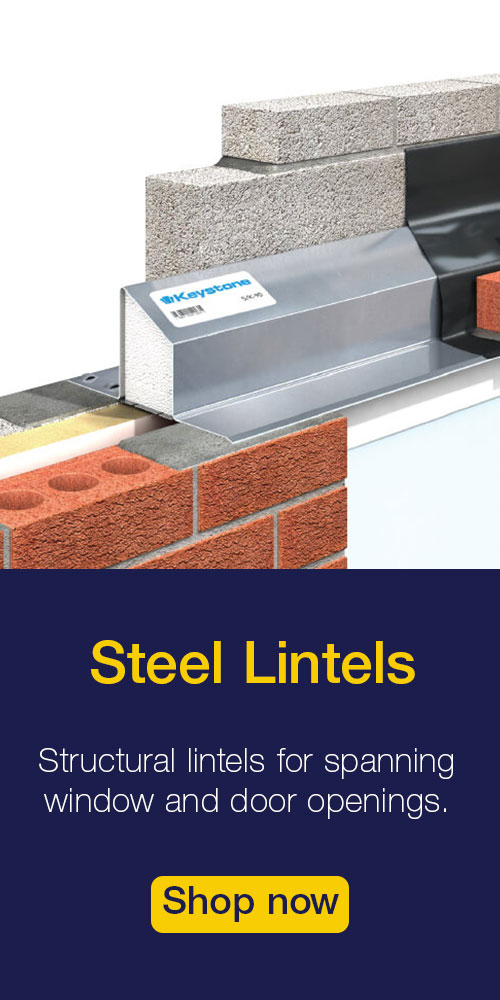
Their modular sizing helps reduce on site cutting and speeds installation, particularly around openings supported by Steel Lintels or Concrete Lintels. When combined with suitable damp proofing details, joint finishing and good site practice, the resulting masonry offers long term stability and weather protection. Routine upkeep may involve occasional cleaning using Brick & Patio Cleaners, and where exposure is high, additional measures from Damp & Waterproofing can help safeguard the structure.
Brick & Block FAQ's
For internal partitions, 100mm blocks are common. Structural walls or larger cavities may use 140mm or 215mm units. Strength classes vary, so follow your design specification or building requirements.
A single skin wall typically uses around 60 standard bricks per square metre. Standard concrete blocks usually require around 10 per square metre, allowing for typical mortar joints.
A simple builder’s line makes a big difference. Fix the line between two ends of your wall at the height of each course, then lay your bricks so the top edges just touch the string. Check with a small spirit level every few bricks, and don’t rush, adjusting early is easier than correcting a wobbly wall later.
Scoop some mortar onto your trowel and gently tilt it. It should stay in place without running, but still be soft enough to spread smoothly. If it’s too stiff, add small amounts of water and remix; if it’s too wet and slumps, add a little more sand and cement in the same ratio. Well mixed mortar should hold its shape when tapped, making it easier to bed bricks evenly.