



Patio Ideas for Small Gardens: Inspiration, Materials and Tips
A small garden isn’t a limitation. It’s a design brief. With the right layout, the right materials and a clear sense of how you actually want to use the space, a small patio can be every bit as good as a large one. In some ways better: easier to maintain, faster to install, and far cheaper to do well.
This guide pulls together ten ideas for small garden patios in NI, along with the practical materials and dimensions that make them work. Whether you’ve got a courtyard, a strip behind a terrace, or a postage-stamp back garden, there’s something here that’ll fit.
The golden rule for small patios
Keep the materials, colours and lines simple. Small spaces feel bigger when there’s less visual noise. One paving material, one accent colour, and clean rectangular or curved lines do far more than a busy mix of stone, brick, gravel and pots.
1. Go Big on the Slabs
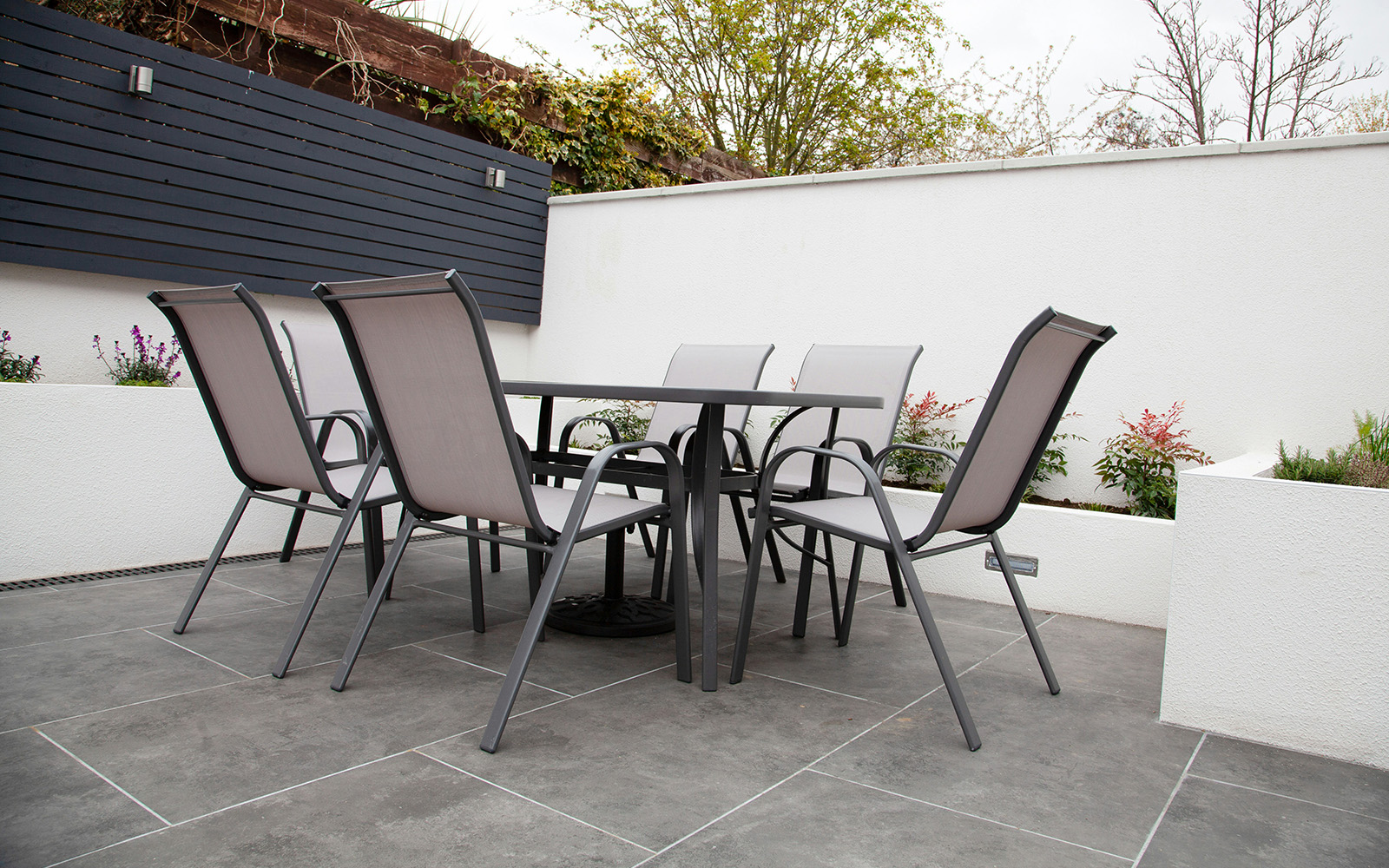
Counter-intuitively, large-format slabs make a small patio look bigger. Fewer joints means the eye reads the patio as one continuous surface rather than a chequerboard of small pieces. Aim for 600mm x 600mm or 900mm x 600mm porcelain slabs as a starting point. Small flagstones or block paving in a 3m x 3m courtyard will look fussy by comparison.
2. Mirror the House Material
Use a patio material that picks up a tone from the house. Soft grey porcelain against a grey rendered wall, warm sandstone against red brick. A small patio that matches the building reads as an extension of the house rather than a separate feature, which makes the whole garden feel bigger.
3. Curve, Don’t Square It Off
Square patios tucked into square gardens emphasise the boundaries. A patio with one or two soft curves. Even just a curved edge along a planting border. Pulls the eye outward and softens the space. Easy to do with porcelain or sandstone, harder with rigid block paving.
4. Build a Single-Slab Bench
A planter wall doubling as a bench is the highest-value feature in a small garden. Two courses of decorative walling stones, 450mm tall, topped with a 600mm-deep flagstone makes a permanent bench seat. No patio furniture to store, no clutter, instant seating. Soften with cushions in summer.
5. Use a Stepping-Stone Path
In a long, narrow garden, run the patio across the width nearest the house and use a few stepping-stone slabs through gravel or planting to lead toward the rear. The contrast between a solid patio area and broken-up stepping stones makes the garden feel layered rather than rectangular.
6. Pair Paving with Gravel
Combine a small porcelain or sandstone patio area with surrounding decorative gravel. Gravel is cheap (~£4-£6 per m²), free-draining, and breaks up the visual weight of a fully paved garden. Use a steel or aluminium edging strip to keep the gravel and slabs cleanly separated.
7. Light It After Dark
Recessed deck lights or solar uplighters tucked into planting borders make a small patio usable for an extra few hours each evening. And visually double the space at night. Plan the lighting before you lay the patio so cables can run under the slabs.
8. Frame It with Built-In Planters
Permanent bu ilt-in planters around the edge of a small patio focus the eye and define the space without crowding it with pots. Concrete walling stones in a contemporary grey, with single specimen plants (acer, dwarf olive, bay) inside, look far cleaner than a row of mixed containers.
9. Add a Statement Centrepiece
A small patio is the ideal place for one striking centrepiece. A fire bowl, a planted urn, a sculptural water feature. Resist the urge to fill the space; one good feature draws the eye and gives the patio purpose.
10. Match the Furniture to the Footprint
A 3m x 3m patio comfortably fits a 4 seater bistro set or a small dining table. A 4m x 4m patio fits a 6 seater table and a couple of loungers. Measure the patio before you buy furniture. Most small patios get crowded because the furniture is too big, not because the patio is too small.
Quick Materials Guide for Small Patios
| Best paving choices | Avoid in small gardens |
|---|---|
|
|
Sizing the Patio
A common mistake in small gardens is sizing the patio for the furniture rather than for how the patio will actually be used. As a rule of thumb:
- 2–3 person sun spot: 1.8m x 2m minimum
- 4-seater bistro: 2.5m x 2.5m
- 4-seater dining set: 3m x 3m
- 6-seater dining with circulation: 3.5m x 4m
- Lounge area with sofa: 3m x 3.5m
Common Mistakes to Avoid
- Too small slabs: Small-format slabs make small patios look chopped up. Go bigger.
- Mixing too many materials: One paving, one accent, max. Restraint is the single best design choice in a small garden.
- Forgetting the fall: A small patio with no fall floods just as easily as a large one. 1:60 minimum, away from the house.
- Oversized furniture: A 6-seater dining set in a 2.5m courtyard is uncomfortable. Match the kit to the space.
Frequently Asked Questions
Most small NI gardens work well with a 2.5m x 2.5m to 3.5m x 3.5m patio. Bigger eats too much of the garden; smaller can’t comfortably hold a dining set.
Concrete slabs are the most affordable option (£20–£35 per m²). Porcelain is around twice the price but lasts longer and needs no sealing in NI’s wet climate.
Yes. A well-laid small patio in good condition typically adds £2,000–£5,000 to a UK property’s perceived value, especially in homes where outdoor space is limited.
Porcelain. It doesn’t soak up moisture, won’t turn green in shade as fast as sandstone or concrete, and is the easiest to keep clean.
Make Your Small Garden Patio With MacBlair
MacBlair stocks porcelain, sandstone, concrete slabs and decorative walling stones. Everything you need to build a small patio with character. Bring your measurements into your nearest NI branch and our team will work out exact quantities for the job.