



How to Clean and Maintain Your Patio: A Seasonal Guide
A patio that gets a couple of hours of care each year looks new for a decade. A patio that gets ignored turns green, slippery and stained. And the longer the algae and moss are left, the harder they are to remove. The good news is that maintaining a patio in Northern Ireland is straightforward if you know what to do and when to do it.
This guide covers the seasonal cleaning routine that keeps patios looking sharp in NI’s wet, frost-prone climate, plus the spot-fixes for the issues that come up most often: algae, moss, oil stains, lichens and weed growth in the joints.
The cardinal rules of patio cleaning
- Always sweep first. Sand and grit scratch slabs if you wash without sweeping.
- Test any chemical cleaner on a small area before using on the whole patio.
- Never use a pressure washer at full power on porcelain or sealed sandstone. It damages the surface and erodes joints.
- Re-point joints if washing removes jointing sand or compound.
- Clean on dry days when temperatures are above 5°C. Wet, cold patios refreeze before they dry.
Seasonal Patio Maintenance Schedule
Spread the work across the year and the patio never needs a big overhaul. Use the schedule below as a default and adjust to your patio’s exposure.
SPRING (MARCH – APRIL)
Annual deep clean. Sweep thoroughly, then wash with a patio cleaner (or a mild biocide for algae). Re-point any joints that have lost sand or compound over winter. Inspect for cracked or loose slabs and re-lay if needed. This is also the best time to apply a sealer to concrete or sandstone slabs.
SUMMER (MAY – AUGUST)
Light upkeep. Sweep weekly to remove debris. Spot-treat any weeds appearing in joints. Re-oil garden furniture and check that downpipes aren’t discharging straight onto the patio. Quick patio rinse before summer events using a soft brush and water.
AUTUMN (SEPTEMBER – NOVEMBER)
Pre-winter prep. Sweep up leaves promptly. Wet leaves left in place stain slabs. Wash off any algae starting to build up. Treat moss appearing in shaded corners with a biocide before winter sets in. Re-point any joints that look thin before the freeze-thaw cycle damages them further.
WINTER (DECEMBER – FEBRUARY)
Damage limitation. Use grit (not rock salt) on icy patios. Salt damages mortar and concrete slabs. Keep gutters and downpipes clear so excess water doesn’t pool on the patio. Hold off on any chemical cleaning until temperatures are reliably above 5°C.
How to Remove Common Patio Problems
Algae and green slime
The single most common issue on shaded NI patios. Algae thrives in damp, shaded conditions and turns slabs slippery and green. Use a proprietary patio biocide ( sodium hypochlorite-based for concrete; benzalkonium chloride-based for porcelain) applied with a watering can or spray, leave for the time on the label (typically 24 hours), then rinse with clean water. Treats algae for around 6 months.
Moss in joints and on slabs
Like algae, moss loves shade and damp. Scrape out heavy moss with a patio scraper, then treat with a moss killer. Re-pointing the joints with polymeric or proprietary jointing compound is the long-term fix. Once joints are properly filled, moss has nowhere to anchor.
Oil and grease stains
BBQ drips, lawn mower oil, car oil on a driveway. Soak up fresh spills immediately with cat litter or sawdust. For dried-in stains, apply a degreasing cleaner (washing-up liquid for light stains, a proprietary patio degreaser for stubborn ones), scrub with a stiff brush , and rinse. Repeat for heavy stains.
Rust marks
Usually from metal garden furniture or BBQ feet left on damp slabs. A specialist rust remover designed for stone (oxalic-acid based) is the safest option. Bleach-based cleaners can permanently discolour the surrounding slab.
Lichens (yellow / grey patches)
Slow-growing but tough. A patio biocide will kill the lichen over a few weeks, then a stiff brush and rinse will remove the residue. Re-treating once a year keeps lichens from returning.
Black spot on sandstone
A fungal infection specific to sandstone. Small black dots that won’t scrub off. Use a specialist black-spot remover (avoid bleach, which won’t penetrate). It’s an annual problem in NI’s damp climate; sealing the sandstone after treatment helps slow recurrence.
Pressure Washing: Do’s and Don’ts
Pressure washers are useful but easy to misuse. Follow these rules:
- Use a low-pressure setting: 1,500–2,000 PSI is plenty for patios. Full pressure (3,000+ PSI) damages slab surfaces and erodes joints.
- Keep the nozzle moving: Stationary blasting creates pale patches on concrete slabs and stripes on sandstone.
- Hold the nozzle at an angle: 30–45° from the surface, not straight down. Less surface damage, better cleaning action.
- Re-sand joints afterwards: Pressure washing almost always blasts out jointing sand. Brush in fresh polymeric sand once the patio dries.
- Avoid porcelain at full pressure: Porcelain doesn’t need it. Algae lifts off with a stiff brush and a biocide.
Sealing Your Patio
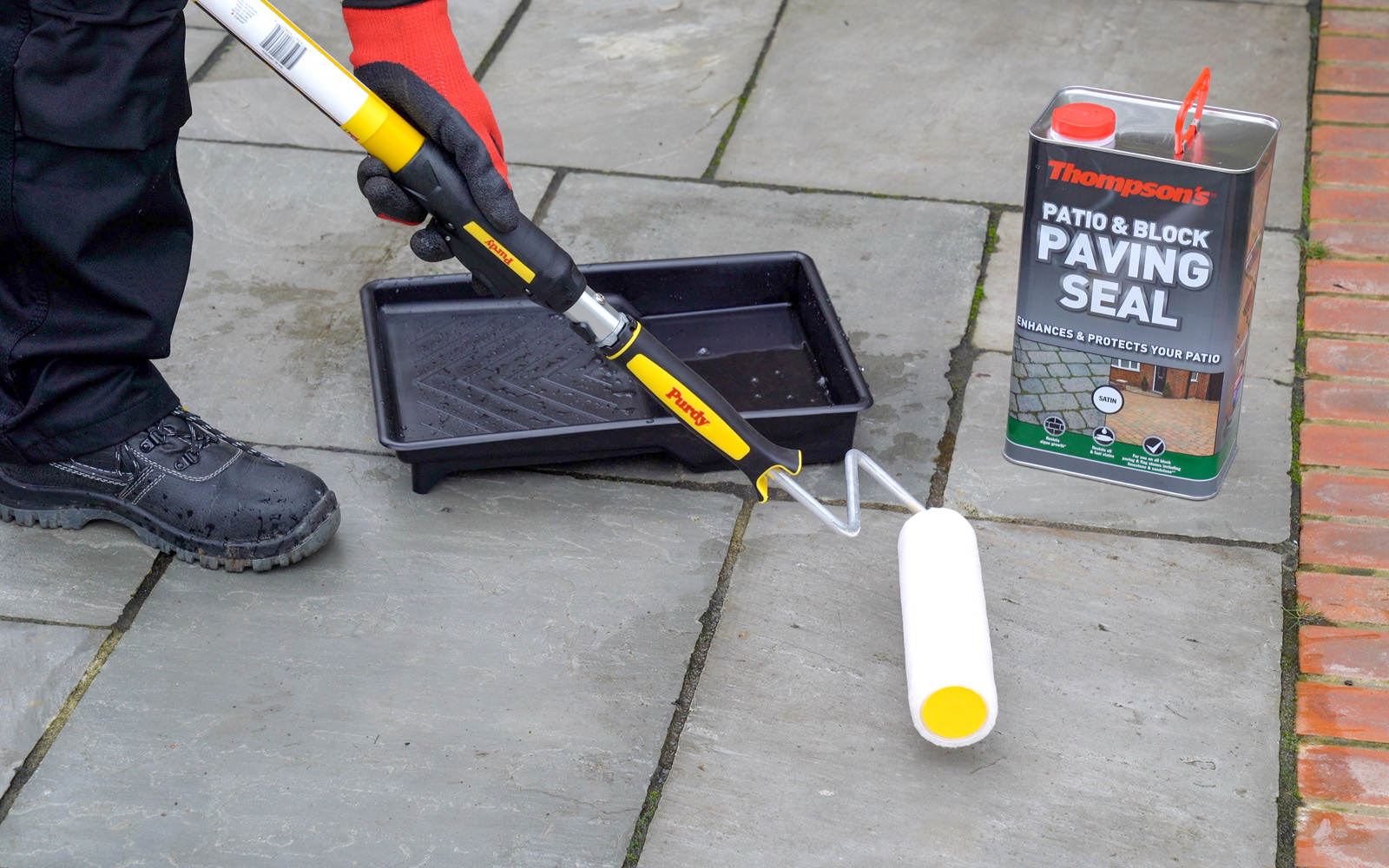
Sealing extends the life of concrete and natural-stone patios significantly in NI. Apply a patio sealer once every 2–3 years on a clean, dry surface. Avoid sealing porcelain (it’s non-porous and doesn’t need it). A good sealer makes future cleaning easier, slows algae and lichen growth, and brings out the colour in the stone.
Frequently Asked Questions
A proprietary patio biocide applied with a watering can or sprayer, left for the time stated on the label, then rinsed with clean water. Repeat once or twice a year on shaded patios in NI.
Diluted bleach (1:10) works on concrete but can stain or damage sandstone, limestone and porcelain. A patio-specific biocide is safer and longer-lasting.
A quick brush every week or two during summer, a deep clean once a year in spring, and a pre-winter wash in autumn. Shaded patios may need a second biocide application mid-year.
No. Most patio sealers last 2–3 years. Over-sealing builds up a milky film and traps moisture. Clean thoroughly first, then re-seal only when water stops beading on the surface.
It can. At high pressure or held in one spot too long, it erodes mortar joints, lifts jointing sand, and damages soft slab surfaces. Use moderate pressure and keep the nozzle moving.
Get Your Patio Cleaning Supplies from MacBlair
MacBlair stocks patio cleaners, biocides, jointing sand and compounds, sealers and the tools you need to keep patios looking great. Bring your slab type into your nearest branch and our team will recommend the right product.