



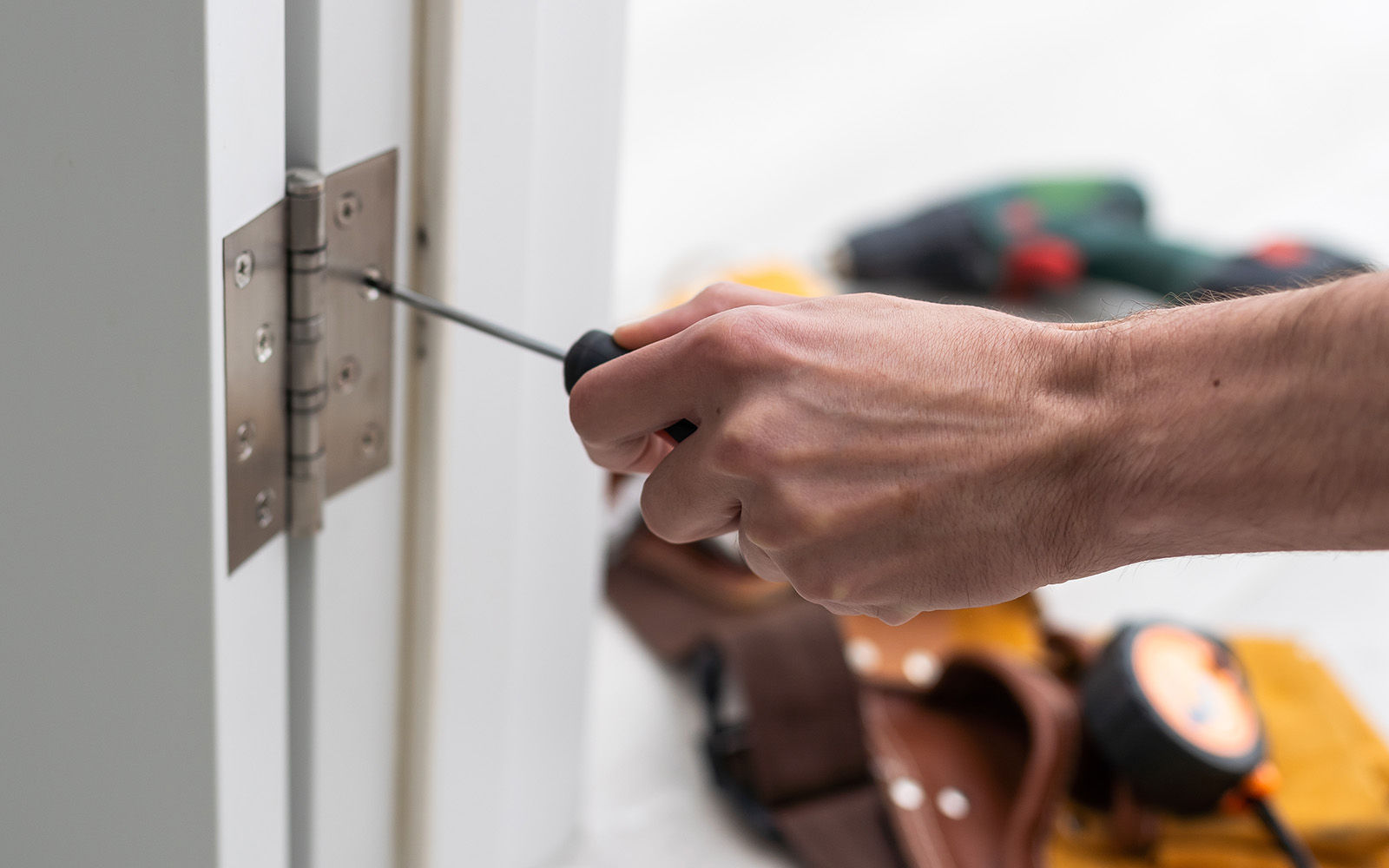
How to Hang an Internal Door: A Step-by-Step DIY Guide
Hanging an internal door is one of those jobs that looks complicated but is genuinely manageable for a competent DIYer. Get the prep right, work carefully, and you'll end up with a door that swings smoothly and closes cleanly.
What You'll Need
Tools
- Tape measure
- Pencil and marking gauge
- Hand saw or circular saw
- Plane (hand plane or electric)
- Chisel set
- Mallet
- Drill and bits
- Screwdriver or impact driver
- Spirit level
- Wedges or door stands
Materials
- Internal door (sized to suit your opening)
- 3 × butt hinges (75mm or 100mm)
- Door latch or handle set
- Wood filler
- Primer and paint or door oil/wax
Step 1: Measure Your Opening and Choose the Right Door
Measure the width and height of your door frame opening, the clear gap between the linings. Standard internal doors in the UK are 762mm × 1981mm (2'6" × 6'6") but older NI properties can have non-standard openings, so always measure before buying.
You want the door to be slightly smaller than the frame opening, with a consistent gap of around 2mm on each side and at the top, and a gap of 6–8mm at the bottom to clear carpet or flooring.
Step 2: Trim the Door to Size
If the door needs trimming, mark your cut lines carefully. When sawing, cut with the good face upward if using a hand saw, or facing downward with a circular saw. For minor trimming, a hand plane is better than a saw.
Important: don't remove more than 6mm from any edge of a hollow-core door or you'll cut into the structural frame inside the blank.
Step 3: Mark and Cut Hinge Recesses on the Door
Internal doors typically use three hinges. Standard positions: top hinge 150mm from the top, bottom hinge 230mm from the bottom, middle hinge centred between the two.
Use a marking gauge and chisel to cut the hinge recesses on the door edge. The recess should be exactly as deep as the hinge leaf thickness which is typically 2mm.
Step 4: Mark and Cut Hinge Recesses on the Frame
With hinges screwed temporarily into the door, hold the door in the frame and mark the hinge positions onto the frame. Cut matching recesses to the same depth. Test-fit the door after each recess is cut out, it should sit flat with no gaps.
Step 5: Hang the Door
Screw the hinges to the door first, then hang the door onto the frame. Get someone to help hold the door while you start the screws.
Check the door swings freely and closes cleanly with a consistent gap all around. If the door sticks or binds, pack a hinge recess slightly with a thin piece of card to adjust position. If the gap is uneven, check the frame is plumb. Older NI properties often have frames slightly out of square.
Step 6: Fit the Latch and Handles
Mark the latch position on the door edge, typically 900mm from the floor. Cut the latch housing with a chisel, then mark and chisel the strike plate recess in the frame. Most door handle sets come with a fitting template to make this straightforward.
Frequently Asked Questions
Two is technically enough for a hollow-core door, but three is better practice, especially for heavier solid doors or fire doors.
It's much easier with two people. With a good door stand or wedges and patience, a solo hang is possible but allow extra time.
75mm for most lightweight hollow-core doors. Use 100mm for solid timber doors or fire doors.
Bring your measurements to MacBlair. We stock a range of sizes and can advise on the best option.
Get Your Materials from MacBlair
MacBlair stocks internal doors, hinges, latch sets, handles and all the fixings across our Northern Ireland branches. Visit your nearest branch or browse our doors and interiors range at macblair.com.